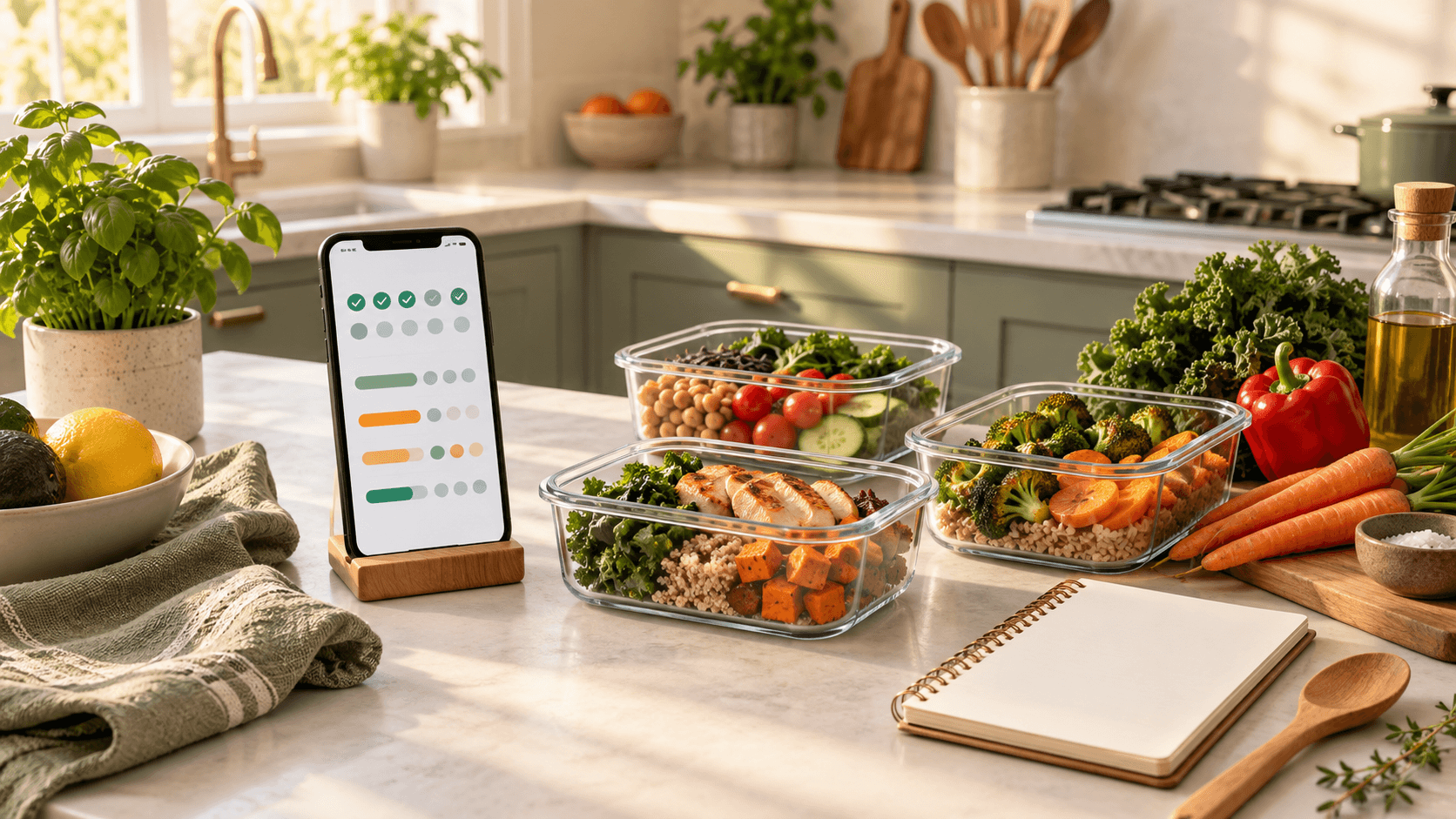
Meal Prep Habit Tracker: Build a Weekly Food Routine
A meal prep habit tracker can turn food preparation into a small weekly rhythm instead of a Sunday marathon. It helps you repeat the useful parts—checking what you have, choosing a few meals, shopping from a list, preparing flexible ingredients, storing food safely, and resetting the kitchen—without pretending every week will look the same.
The goal is not a refrigerator filled with identical containers or seven perfectly planned dinners. It is a dependable system that reduces last-minute decisions while leaving room for leftovers, schedule changes, appetite, budget, and the people you feed.
Why meal prep needs its own habit tracker
Meal prep is not one habit. It is a chain of decisions and actions spread across several days. You review the calendar, check the pantry, choose meals, write a grocery list, shop, prepare food, store it, eat it, and notice what was wasted or missing. If one link is unclear, the entire routine can feel harder than the cooking itself.
A generic checkbox called meal prep hides that chain. You may mark it incomplete because you did not cook five meals, even though you planned dinners and washed vegetables. Or you may cook a large batch but forget storage labels and a plan for using it.
A better tracker makes the recurring actions visible:
Fridge and pantry checked
Weekly meals sketched
Grocery list completed
Flexible ingredients prepped
Leftovers labeled and reviewed
Kitchen reset finished
These actions can happen on different days. The tracker should protect the sequence, not force every step into one exhausting session.
Separate meals, tasks, and habits
A recipe is not a habit. Buying a new pan is not a habit. A dinner reservation is not a habit. Each belongs in a different part of your system.
Use a habit tracker for actions that repeat, such as checking the fridge before planning or labeling prepared food. Use a task list for one-time jobs, such as replacing a broken container or trying a specific recipe. Use a calendar for events and time-sensitive plans, such as a late meeting, school activity, dinner out, or grocery pickup.
The habit tracker versus to-do list guide can help when your meal system feels crowded. A useful rule is simple: if it repeats as part of the process, track it as a habit; if it needs to happen once, keep it as a task.
This division also prevents the tracker from becoming a menu. You do not need seven dinner names in a habit app. You need the small routines that make choosing and preparing those dinners easier.
Plan from the week you actually have
Before choosing recipes, look at the calendar. Count the evenings when cooking is realistic, the days when leftovers would help, and the meals that will happen elsewhere. A plan for an imaginary calm week creates waste and frustration.
The USDA's MyPlate guidance on planning weekly meals recommends checking what is already in the freezer, cabinets, and refrigerator; writing down meals; considering the time available; planning to use leftovers; and making a grocery list. Those actions translate cleanly into a short planning habit.
Try this weekly sequence:
Review the next seven days
Mark nights with limited cooking time
Check food already at home
Choose two or three main meal ideas
Assign one leftovers or flexible night
Build the grocery list from the gaps
Notice that the sequence does not require a meal for every slot. Leaving space is part of planning. It gives you somewhere to use extra portions, respond to a changing schedule, or choose something simple when energy is low.
Choose a repeatable weekly cue
A meal prep routine becomes easier when it starts from a cue you can recognize. The cue might be Friday after work, Saturday morning coffee, the arrival of a grocery order, or the moment you put away the previous week's containers.
Pick separate cues for separate actions:
After checking the weekend calendar, sketch meals
Before opening the grocery app, check the pantry
After groceries are stored, wash or portion selected ingredients
After dinner, label leftovers before leaving the kitchen
Before the next planning session, review what remains
Avoid relying on motivation to begin a huge prep block. A cue should lead to a first action that takes a few minutes. Open the fridge and take inventory is easier to start than prepare food for the whole week. Once the first link is stable, the rest of the sequence has somewhere to attach.
If your schedule changes every week, anchor the routine to an event rather than a clock. Plan after the weekly calendar review can work whether that review happens on Thursday night or Sunday morning.
Start with a minimum viable prep routine
The smallest useful routine is usually three habits:
Check what you have
Choose the next few meals
Prepare one ingredient that removes future friction
That ingredient might be cooked grains, washed greens, chopped vegetables, a sauce, boiled eggs, marinated protein, or portioned snacks. Choose something that appears in more than one likely meal.
When those habits feel easy, add a grocery-list check, a storage-label habit, and a leftover review. Do not add ten habits at once. More tracking does not create more food or more time.
Define what counts as done:
Pantry checked means you looked at the key staples, not cataloged every spice
Meals chosen means two or three realistic ideas, not a finished menu document
Ingredient prepped means one useful component is ready
Kitchen reset means surfaces and tools needed tomorrow are usable
Clear definitions keep a modest week from looking like failure.
Prep components instead of identical meals
Many people abandon meal prep because they imagine eating the same finished dish for days. Component prep offers more flexibility. Prepare a few building blocks that can combine in different ways.
For example:
One grain or other base
One protein option
Two vegetables
One sauce or dressing
One quick backup meal
The same components might become a bowl, wrap, salad, soup addition, or side dish. This works especially well when household members have different schedules or preferences.
Track the components you actually use, not an aspirational collection of recipes. A habit like prepare one flexible base is more repeatable than cook five complete lunches. It also gives you permission to buy helpful prepared ingredients when time, energy, ability, or kitchen access is limited.
The point of the tracker is to reduce the number of decisions standing between hunger and a workable meal. It is not to prove that every ingredient was prepared from scratch.
Build a grocery loop that starts at home
A grocery habit should begin with what you already own. Check the refrigerator, freezer, pantry, and any produce that needs to be used soon. Then write the list around the chosen meals and missing staples.
Useful recurring habits include:
Use-soon food identified
Freezer space checked
Meal ingredients compared with inventory
Grocery list grouped by section
Household requests confirmed
Backup meal restocked
Keep one trusted place for the list. A paper list on the refrigerator, a shared note, or a grocery app can all work. The important part is that items enter the same system when they run low.
Do not use the habit tracker as the grocery list itself. Track list reviewed or list completed, then keep the actual items where they are easy to add, share, and check off. This is a small boundary, but it prevents dozens of food names from overwhelming the handful of routines you want to repeat.
Make food safety part of the process
A completed prep streak does not tell you whether food was handled safely. Safety steps should be built into the routine and based on current guidance, not guessed from smell or appearance.
USDA Food Safety and Inspection Service summarizes four core practices in its food safety basics: clean hands and surfaces, separate foods to prevent cross-contamination, cook to appropriate temperatures, and chill promptly. It also advises using a food thermometer and refrigerating perishable food within two hours, or within one hour above 90°F.
Turn the process into observable actions:
Hands and prep surfaces washed
Raw and ready-to-eat foods kept separate
Food thermometer used where needed
Prepared food moved to suitable containers
Perishable food chilled promptly
Do not replace these actions with a vague safe prep checkbox. Specific habits are easier to remember and review. Follow the authoritative guidance that applies to the food, equipment, and people in your household, especially when cooking for someone at higher risk of foodborne illness.
Label and rotate prepared food
Meal prep loses value when containers become mysteries. Label what is inside and when it was prepared, then place older food where it will be seen first. A simple date and contents label is often enough.
FoodSafety.gov's cold food storage chart lists recommended refrigerator and freezer storage times for many foods. Use that reference rather than creating one universal expiration rule for every prepared item.
Useful storage habits include:
Contents and date labeled
Older prepared food moved forward
Refrigerator temperature checked periodically
Leftovers reviewed before planning
Food frozen when appropriate
Items discarded according to safety guidance
The tracker should remind you to check. It should not declare that food is safe because a box was marked. Storage time, temperature, ingredients, handling, and official recommendations still matter. When in doubt about a specific food, consult the relevant guidance.
Add a five-minute kitchen close
The next meal is easier when the previous one ends with a small reset. A kitchen close does not need to mean deep cleaning. It means leaving the essential surfaces, tools, and information ready for the next use.
A practical close might be:
Store and label leftovers
Put perishable ingredients away
Wash or load the tools needed tomorrow
Wipe the main prep surface
Note any item that ran out
This overlaps with home care, but the intent is narrower than a full cleaning routine. The habit tracker for cleaning guide can hold recurring room and equipment care; the meal prep tracker should keep only the short reset that protects the food workflow.
If five steps are too much after dinner, use a two-step version: store food safely and clear the main prep area. The routine can expand on easier nights.
Track leftovers before making more food
The weekly review should happen before the next shopping and prep cycle. Look for portions that need to be eaten, ingredients that were never used, and meals that produced much more or less than expected.
Ask four questions:
What should be used first?
What can become tomorrow's meal?
What should be frozen or discarded according to guidance?
What should we buy or prepare differently next week?
Track leftover review as one habit. Keep the details in a note or list. Over time, the answers reveal useful patterns: a recipe makes too many portions, chopped vegetables get used quickly, a certain lunch is repeatedly skipped, or one backup meal prevents expensive last-minute orders.
Do not turn waste into a shame score. Plans change, and some food loss is unavoidable. The tracker is there to improve the next decision, not to punish the last one.
Share the routine without creating surveillance
In a shared household, meal prep often fails at handoffs. One person plans, another shops, someone changes the schedule, and nobody knows whether leftovers are reserved. A few visible handoff habits can help.
Examples include:
Schedule changes shared before planning
Grocery requests added by the cutoff
Prepared food labeled for shared use
Leftovers claimed or released
Empty staple added to the list
Track the handoff, not another person's behavior. Added my requests is appropriate. Partner followed the meal plan is not. A household system should support coordination without scoring appetite, food choices, body size, or compliance.
If children participate, give them concrete age-appropriate actions such as choosing one dinner, washing produce with supervision, or returning a reusable container. The aim is shared ownership and practical skill, not perfect completion.
Match the routine to energy and capacity
Not every week can support the same prep session. Work deadlines, illness, travel, caregiving, pain, limited mobility, sensory needs, and kitchen access all change what is realistic. Create three levels before you need them.
Full week:
Plan several meals
Shop from a complete list
Prep multiple flexible components
Portion and label food
Reduced week:
Choose two meals
Restock staples
Prep one component
Keep one backup meal ready
Minimum week:
Check essential food needs
Arrange the simplest safe options available
Prepare tomorrow's first meal or snack
A reduced plan is not a failed full plan. It is the correct plan for the available capacity. Mark the habits that matched the chosen mode and pause the rest.
A simple meal prep tracker setup
Start with six habits for two weeks:
Weekly schedule reviewed
Fridge and pantry checked
Meal ideas chosen
Grocery list completed
One flexible component prepared
Leftovers labeled and reviewed
Schedule the first four once per week. The prep habit may happen once or twice. Labeling can appear on cooking days, and the leftover review can happen before the next plan.
If the list feels heavy, begin with three:
Check what you have
Choose two meals
Prep one ingredient
After two weeks, keep the habits that reduced friction. Remove any checkbox that merely recorded work without changing what happened next. Add a new habit only when a repeated problem has a clear action attached to it.
Common meal prep tracking mistakes
The first mistake is measuring containers instead of usefulness. Ten filled containers do not help if the food does not fit your schedule or preferences.
The second is planning every meal. Leave room for leftovers, simple options, social plans, and changed appetites.
The third is treating recipes as habits. Recipes belong in a recipe collection or weekly plan. Track the process that brings a realistic meal into reach.
The fourth is ignoring storage. Preparation is not finished until perishable food is safely stored and labeled.
The fifth is tracking another person's eating. Shared systems should coordinate work, not monitor bodies or control choices.
The sixth is rebuilding the routine after one difficult week. Switch to the reduced version, keep the most useful actions, and review when the week changes.
The meal prep habit tracker rule
Track the steps that make the next meal easier.
That usually means checking what you have, planning around the real week, shopping from a list, preparing one or two flexible components, storing food safely, reviewing leftovers, and closing the kitchen with tomorrow in mind.
A meal prep habit tracker should reduce decisions and waste without demanding a perfect menu. Start with three habits, define what done means, and let the routine expand only when it genuinely helps. The best system is not the one that prepares the most food. It is the one you can repeat safely on an ordinary week.

Learn more
Discover more from the latest posts.