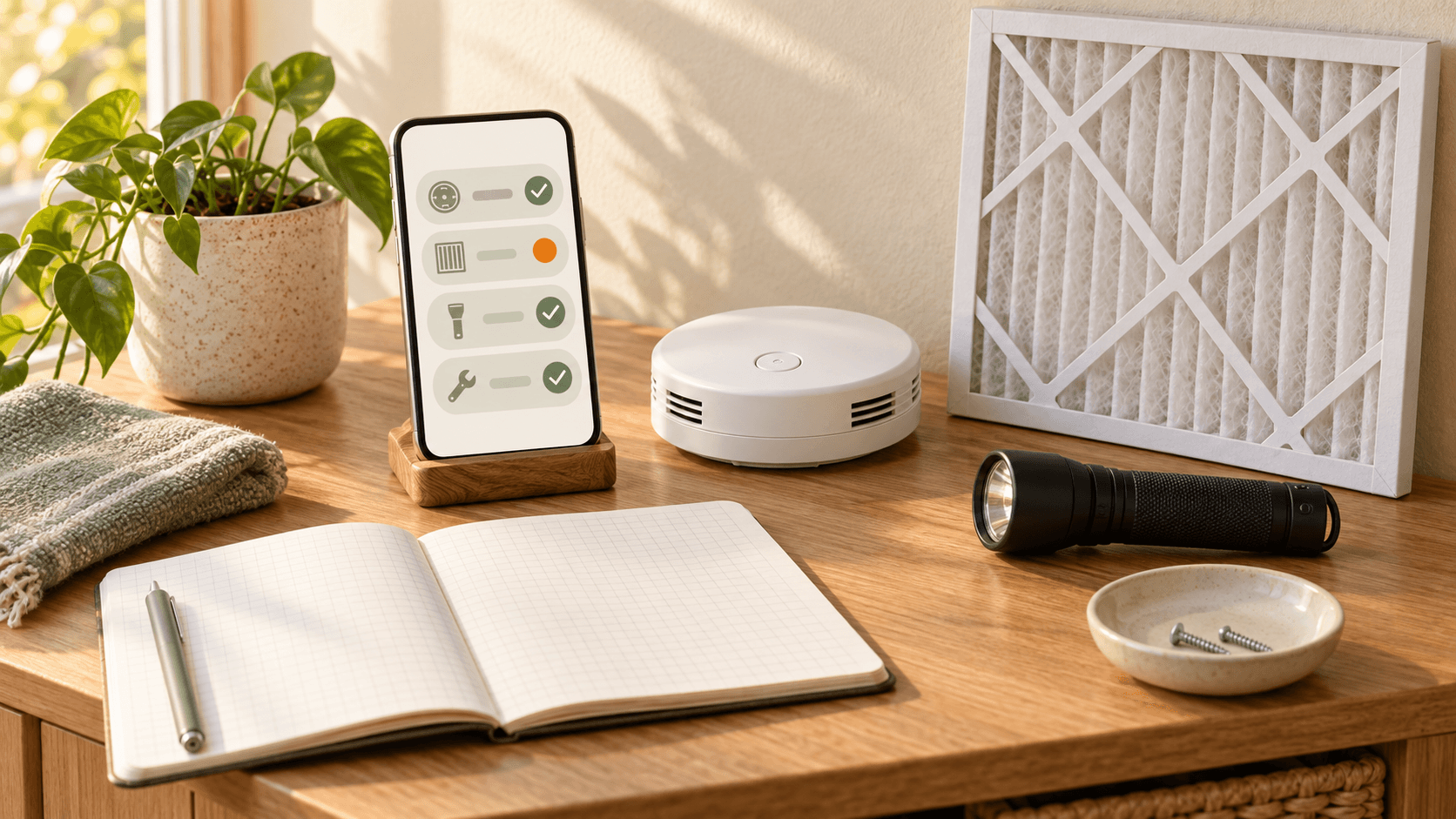
Home Maintenance Habit Tracker: Build a Simple Routine
A home maintenance habit tracker turns scattered checks into a routine you can actually remember. Instead of waiting for a leak, a dead alarm, or a struggling heating system to demand attention, you give a few small inspections a place in the week, month, and season.
The goal is not to turn your home into a daily project. It is to notice changes early, keep service records together, and separate safe checks from work that belongs to a qualified professional. A useful tracker covers the repeatable actions you control: test, inspect, record, schedule, and follow up.
Why home maintenance needs its own tracker
Home maintenance happens on several clocks. A smoke alarm test may be monthly. A heating or cooling check may follow the season. A leak inspection may be brief but regular. A repair happens once and should disappear when it is finished.
That mix is why maintenance gets lost. Daily habit lists are too frequent for most jobs, while a plain task list does not always preserve the repeating schedule. A tracker can make the recurring checks visible without treating every repair as a habit.
This intent is different from a habit tracker for cleaning. Cleaning routines manage dust, laundry, rooms, and supplies. Maintenance routines watch the condition and operation of alarms, plumbing, filters, fixtures, and equipment. Some actions sit near each other, but their purpose is different.
Build a home inventory before building habits
Start by listing what you are responsible for. The answer changes if you rent, own an apartment, manage a house, share a home, or live in a building where maintenance is handled centrally.
Walk through the home and note systems rather than chores:
Smoke and carbon monoxide alarms
Heating, cooling, and ventilation equipment
Water fixtures, exposed pipes, and drains
Major appliances
Doors, windows, locks, and seals
Outdoor drains, irrigation, or gutters, if applicable
Fire extinguisher and emergency supplies
Building or landlord contact details
Warranties, service providers, and model information
Do not copy a huge generic checklist into your tracker. Keep only the systems you actually have and the checks you can perform safely. Manufacturer instructions, lease terms, local rules, and professional advice should override a general online routine.
Separate checks, service, and repairs
A clean system uses three categories.
A check is a brief observation or test you can repeat: press an alarm test button, look under a sink for moisture, or inspect whether a filter appears dirty.
Service is planned work that may require a qualified professional: an annual heating or cooling tune-up, a safety inspection, or maintenance specified by the manufacturer.
A repair is a one-time response to a problem: fix a leaking valve, replace a damaged seal, or resolve a fault found during service.
Track checks as habits. Put service on a calendar. Put repairs on a task list with an owner and deadline. Kabit's habit tracker vs to-do list explains why repeated routines and finish-once actions need different homes.
Test smoke alarms on a real schedule
Alarm testing is a good example of a maintenance habit because it is short, repeatable, and easy to postpone. The U.S. Fire Administration advises people to test smoke alarms every month and follow the manufacturer's instructions. It also notes that replacement timing and battery care depend on the alarm type.
Create one monthly habit: test all smoke alarms. Keep the label simple and store the device locations in the note. If someone cannot safely reach an alarm, arrange help rather than improvising from an unstable chair or ladder.
A completed test is not the same as a repair. If an alarm fails, chirps unexpectedly, is damaged, or is past its recommended service life, create a separate task and follow manufacturer, landlord, building, or fire-safety guidance.
Make leak checks small and visible
Water problems often begin where attention is low: under a sink, beside a toilet, behind an appliance, near a water heater, or around an irrigation connection. A short visual check can become a monthly or seasonal habit.
EPA WaterSense recommends regularly checking a home for leaks and addressing identified problems promptly. Its guidance also suggests comparing water use over time and considering alerts or monitoring where available.
Your habit can be as small as check visible plumbing areas. Look for unexpected moisture, staining, corrosion, dripping, running water, or a bill pattern that deserves investigation. Do not open equipment, touch electrical components, or enter unsafe spaces to complete a checkbox.
When something looks wrong, record the location and what you observed. Then route it to the right person: household owner, landlord, building manager, plumber, or other qualified professional.
Track filters without guessing the interval
Filter schedules vary by equipment, household conditions, and manufacturer. Pets, construction dust, heavy seasonal use, and filter type can change the appropriate interval. A generic internet number should not replace the instructions for your system.
ENERGY STAR recommends checking heating and cooling filters regularly and says to check the filter monthly during heavy-use periods, changing it when dirty and at least as often as its guidance and the equipment instructions require. It also recommends professional tune-ups on a planned schedule.
Use one habit called check HVAC filter, not replace filter. The check can recur monthly or at the interval your system requires. Replacement happens only when appropriate. Record the filter size, installation date, and relevant manufacturer guidance in a note so the next decision is easier.
If the filter is inaccessible or you are unsure how the system should be handled, ask the responsible technician or building manager.
Use seasons instead of arbitrary dates
Many home systems respond to weather and periods of heavy use. A spring check before cooling season and an autumn check before heating season may be more useful than choosing two random dates.
Create a short seasonal review:
Confirm service appointments that are actually required
Check accessible seals, vents, and drains
Review outdoor water or drainage systems you are responsible for
Look for damage after severe weather
Update emergency contacts and shutoff information
Check whether warranties or inspections are due
Seasonal work belongs on a calendar because timing matters. The tracker can hold a seasonal review habit that prompts you to open the checklist. Kabit's habit tracker vs calendar can help keep the repeated review separate from dated appointments.
Adjust the seasons to your climate. Monsoon, freeze, wildfire, storm, or extreme-heat preparation will not look the same everywhere.
Keep a maintenance record, not just checkmarks
A checkmark tells you the action happened. A maintenance note tells you what changed.
For each significant check or service, record only what future you needs:
Date
System or location
Observation
Action taken
Service provider, if relevant
Receipt or warranty reference
Next scheduled check
You do not need a detailed journal for routine passes where everything was normal. Use notes for replacements, unusual sounds, recurring moisture, service visits, and decisions that affect the next interval.
This record is useful when a pattern develops. Three notes about the same drip or repeated system warning tell a different story than isolated checkmarks.
Give each recurring habit a clear finish line
Vague maintenance labels create avoidance. Maintain house has no finish line. Check visible plumbing areas can be completed in a few minutes.
Useful habit labels include:
Test smoke alarms
Check visible leaks
Inspect HVAC filter
Review maintenance log
Check emergency contacts
Run seasonal home review
Avoid labels that hide unsafe or technical work, such as service electrical panel or repair heating system. Those are not everyday habits. They need appropriate expertise and a defined task or appointment.
A habit is complete when the planned check is done, not when every problem discovered during the check is fixed.
Assign ownership in a shared home
Shared maintenance fails when everyone assumes someone else is handling it. Give each recurring check one owner and make the handoff explicit.
Ownership does not mean one person performs every repair. It means that person confirms the check, records the result, and creates the follow-up task. Another household member, landlord, building manager, or professional may complete the next step.
Use neutral labels instead of surveillance. Test alarms — Rahul is clearer than Rahul failed to test alarms. If several people need to be present, put the appointment on a shared calendar rather than forcing it into everyone's habit list.
Review ownership after a move, schedule change, or new appliance installation.
Create a monthly ten-minute review
A short monthly review keeps the system smaller than a giant annual maintenance day.
Open the tracker and ask:
Which checks were completed?
Did any check create a follow-up task?
Is a service appointment approaching?
Is the next seasonal review scheduled?
Can any completed repair be archived?
Does one recurring issue need professional assessment?
Do not add new habits just because a checklist exists online. Add one only when the action applies to your home and has a meaningful repeat interval.
If the review keeps showing the same missed habit, simplify it. Reduce the scope, move the cue, assign a different owner, or use a calendar reminder instead.
Keep safety outside the streak
A streak should never pressure you to open equipment, climb unsafely, handle gas or electrical systems, enter a roof or crawlspace, or perform work you are not qualified to do.
Your tracker can remind you to inspect from a safe position, read the manual, or book a professional. It should not provide repair instructions. Stop a check if you notice heat, smoke, sparking, gas odor, active flooding, structural movement, or another urgent hazard. Leave the area and follow local emergency or utility guidance as appropriate.
Renters should follow lease and building procedures. Homeowners should use qualified professionals where required. The safe choice always outranks completing today's habit.
Use a simple starter setup
Start with four entries for one month:
Test smoke alarms — monthly
Check visible plumbing areas — monthly
Inspect HVAC filter — based on your system guidance
Review maintenance log — monthly
Add one seasonal review on the calendar. Keep repairs and purchases on a separate task list.
After a month, remove anything that does not apply and add only the checks your home actually needs. You may discover that one monthly pass is easier than four separate reminders. In that case, create a single home systems check and keep the locations in its note.
The best setup is the smallest one that helps you notice changes and complete follow-up work.
Common home maintenance tracking mistakes
The first mistake is copying an enormous homeowner checklist without checking whether it applies to your home, climate, lease, or equipment.
The second is mixing cleaning with maintenance. Wiping a surface and inspecting a system may happen together, but they need different outcomes.
The third is marking a discovered problem complete because the inspection happened. The habit can be complete while the repair task remains open.
The fourth is guessing service intervals. Use manufacturer instructions and qualified guidance.
The fifth is tracking technical work as a personal streak. A reminder to schedule service is useful. Pressure to perform unsafe work is not.
The sixth is keeping no record. A brief date and observation can make a later diagnosis or service conversation much clearer.
The home maintenance tracker rule
Track the safe, repeatable action that helps you notice and route a problem: test, inspect, record, schedule, or follow up.
A home maintenance habit tracker should not make you feel responsible for fixing everything yourself. It should reduce surprises, keep recurring checks visible, and make the next responsible action obvious.
Start with alarms, visible leaks, filters, and one monthly review. Keep dated service on the calendar, repairs on the task list, and safety ahead of every streak.

Learn more
Discover more from the latest posts.