Habit Tracker for Beginners: The Only Guide You Actually Need
The first time I tried to track my habits, I set up eleven of them on day one.
I was motivated, optimistic, and completely certain that this time would be different. By day nine I'd missed three habits. By day fourteen, I'd quietly stopped opening the app. By day twenty, I'd uninstalled it and told myself habit tracking just wasn't for me.
It took me another year to realise that habit tracking didn't fail me — my setup failed me. Every mistake I made is a mistake I now see beginners repeat constantly, and every single one of them is avoidable if you know what to look for before you start.
This is the guide I wish I'd had.
What Habit Tracking Actually Is (And What It Isn't)
At its simplest, habit tracking means recording whether you did something you intended to do. That's genuinely all it is. You decide on a behavior, you do it, you mark it done. You build a record of consistency over time.
What it isn't: a magic accountability system that works regardless of how you set it up. It's common for users to abandon an app before the habit becomes established, meaning the app fails to fully assist with habit formation — installing a habit tracking app often becomes a form of wishful thinking rather than a productive strategy. PubMed Central
The difference between wishful thinking and a productive strategy is almost entirely in the setup. Get the setup right and tracking works. Get it wrong and you'll spend six months downloading and deleting apps, wondering what's wrong with you.
There's nothing wrong with you. There's something wrong with how you were taught to start.
The 5 Mistakes That Kill Most Beginners
Before the how-to, the what-not-to. These five mistakes account for the vast majority of beginner abandonment — and they almost always happen in the first two weeks.
Mistake 1 — Tracking too many habits at once
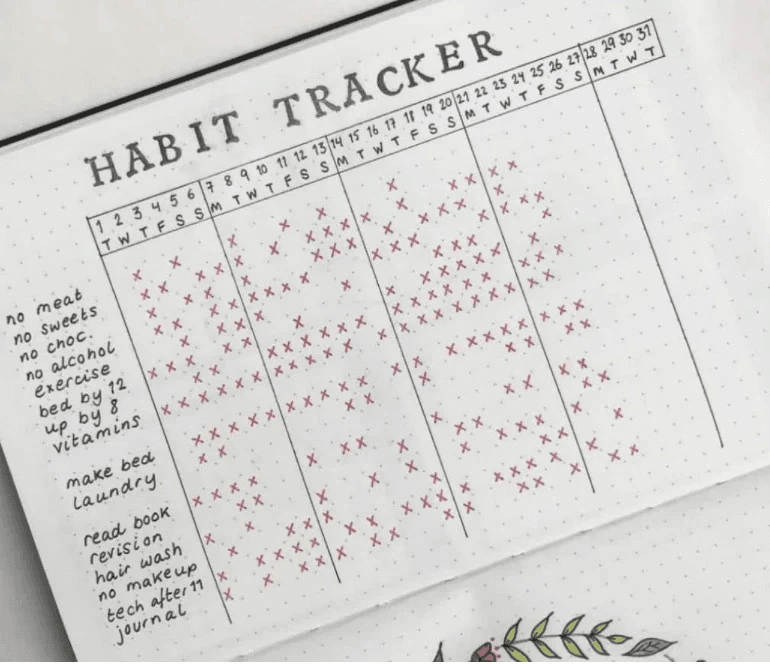
This is the single most common beginner error, and the most damaging. New habit trackers often fall into the "transformation trap" — inspired by success stories and armed with a new app, they attempt to track everything: exercise, meditation, reading, journaling, healthy eating, early rising, and more. arXiv
The problem isn't ambition. It's that habit tracking is itself a habit. Tracking ten habits at once is overwhelming and unsustainable — and remember that habit tracking itself is a separate habit that takes intentionality and strategy to build. ADHD Evidence You're not just building five new behaviors. You're building six — the five habits plus the meta-habit of actually tracking them.
Start with one. Build the tracking habit first. Add a second habit only after the first is feeling automatic.
Mistake 2 — Setting the bar too high
"Exercise for one hour daily." "Read fifty pages before bed." "Meditate for thirty minutes every morning." These are aspirational targets dressed up as habits, and they collapse the moment life gets difficult.
Set ridiculously small minimums instead: "Do one push-up," "Read one page," "Meditate for two minutes." Build the neural pathway first, then scale up. arXiv The goal of the first month isn't performance — it's consistency. A one-minute meditation you do every day builds a stronger neural foundation than a thirty-minute session you do twice a week.
Mistake 3 — Using vague habits
"Be healthier." "Exercise more." "Eat better." These feel like habits but they're actually intentions — and you can't track an intention.
Without specific, measurable criteria, you'll constantly debate whether you "completed" the habit — this ambiguity creates decision fatigue and allows for rationalization. Research on implementation intentions shows that specific, measurable goals are two to three times more likely to be achieved. arXiv Make every habit binary and specific. "Walk for ten minutes" rather than "be more active." "Drink one glass of water before breakfast" rather than "hydrate better."
Mistake 4 — Treating a missed day as total failure
This one is psychological, not logistical — but it does more damage than any other mistake on this list.
Research by Dr. Phillippa Lally found that missing a single day has minimal impact on habit formation, but missing multiple consecutive days significantly sets you back. Yet many people treat one missed day as total failure. arXiv The broken streak triggers an all-or-nothing spiral: "I've already failed, so what's the point of continuing?" This is the what-the-hell effect — and it's the mechanism behind almost every habit that quietly dies in week three.
The rule that prevents it is simple: never miss twice. One miss is an incident. Two consecutive misses is a pattern. Your only job after a miss is to show up tomorrow.
Mistake 5 — Choosing the wrong tool for your personality
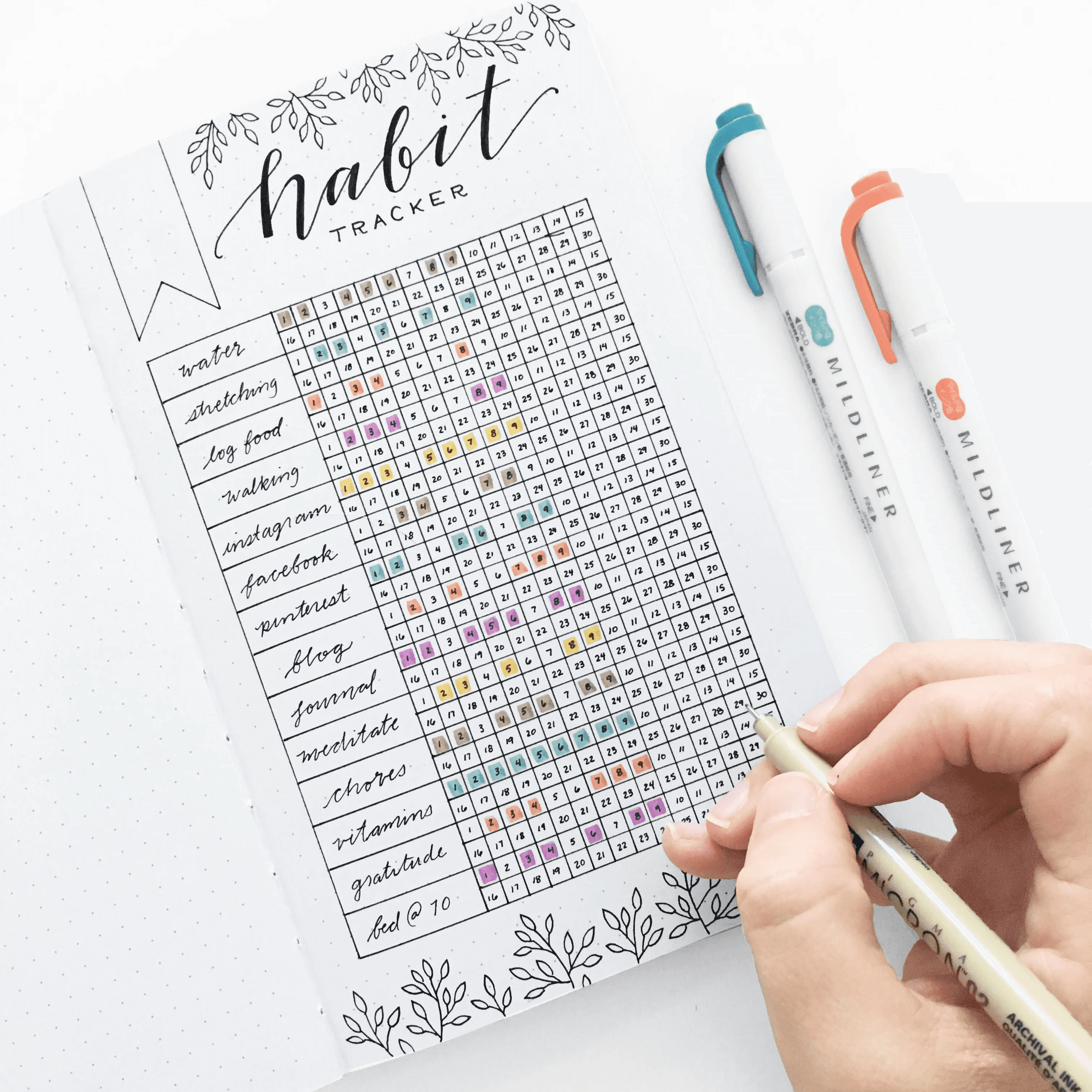
A beautifully designed spreadsheet is useless if you never open your laptop in the evenings. A bullet journal system is useless if you lose the notebook after two weeks. The best habit tracker is the one that fits where you actually are — not the one that looks most impressive on someone else's productivity setup.
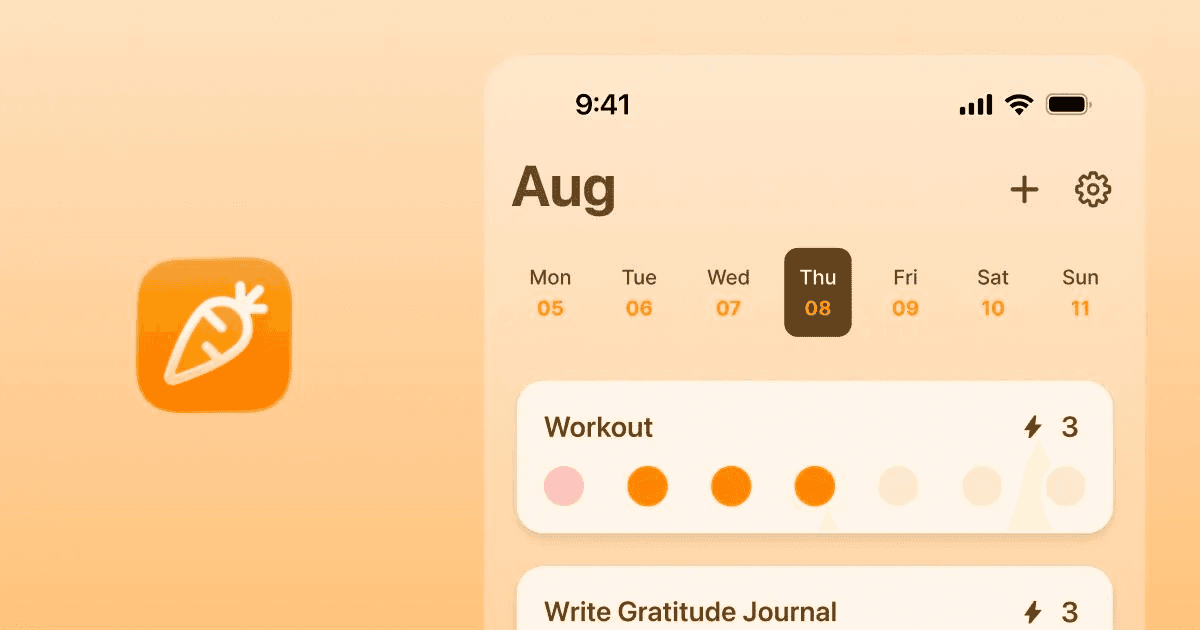
For most beginners, a dedicated mobile app wins on pure friction reduction. It's always in your pocket, it can send reminders, and check-in takes under thirty seconds. But even within apps, design matters. Researchers have warned that many habit tracking apps are too rigid to support diverse practical and emotional needs, and that more flexible, customisable self-tracking apps are required. PubMed Central Simple, flexible, and low-friction beats feature-rich every time for beginners.
How to Set Up Your First Habit Tracker (Step by Step)
Step 1 — Choose one habit
Not three. Not "two small ones." One. Pick something you genuinely want to build and that you can define in a single sentence. It should be specific, small, and daily.
Good first habits: drink one glass of water after waking up, do five minutes of stretching before bed, write three sentences in a journal, take a ten-minute walk after lunch. All of these are specific, achievable on your worst days, and daily.
Step 2 — Attach it to an existing anchor
Don't schedule your habit by time — anchor it to something you already do automatically. "After I make my morning coffee, I will stretch for five minutes." "After I sit down at my desk, I will write my three sentences."
This is the core principle behind habit stacking — borrowing the cue reliability of an established behavior so you don't have to rely on willpower or memory to remember to start. Anchor behaviors act like automatic triggers, and your new habit rides on their consistency.
Step 3 — Set a reminder that fires before the anchor
Not at the habit time — five minutes before the anchor behavior. If your habit fires after morning coffee, set a reminder for just before you'd normally make it. The notification should arrive when you still have full bandwidth to act, not as a late nudge you've already missed.
Write the reminder text in your own voice. "Time to stretch" is fine. "You said you'd stretch today — five minutes, that's it" is better.
Step 4 — Track immediately after the behavior
Record each measurement immediately after the habit occurs. The completion of the habit is the cue to write it down. ADDA Don't batch your tracking at the end of the day — memory is unreliable and the distance between behavior and record breaks the feedback loop that makes tracking motivating.
Open the app, check it off, close the app. The whole thing should take under twenty seconds.
Step 5 — Review at the end of week one
Not to judge yourself — to learn. Did you complete the habit most days? Did the reminder arrive at the right moment? Was the habit actually small enough to do on a hard day? Week one data is diagnostic, not evaluative. Adjust the setup based on what you find out, not based on how guilty you feel.
What to Expect in the First 90 Days
Most beginner guides describe habit tracking as though progress is linear. It isn't, and not knowing that is one of the reasons people quit.
Days 1–14 (Honeymoon phase): Motivation is high. The habit feels novel. Completion rates are usually good. This is the phase where it's tempting to add more habits — resist it. Use the motivation to solidify the first habit's anchor and reminder system.
Days 15–45 (The plateau): Novelty has worn off. The habit still requires conscious effort but no longer feels exciting. This is the highest-risk dropout phase, and it's entirely normal. Generally speaking, the first mistake is never the one that ruins you — it's the spiral of repeated mistakes that follows. ADDA One miss here feels catastrophic but isn't. Two misses in a row starts a pattern. Keep the habit absurdly small if needed — but keep showing up.
Days 45–90 (Automaticity building): The habit starts to feel lighter. You notice you've done it before consciously registering that you needed to. The cue is beginning to reliably fire the behavior. This is when you can consider adding a second habit — not before.
By day 90, if you've been consistent even sixty to seventy percent of days, you've done something most people never manage: built the meta-habit of tracking. That foundation makes every subsequent habit faster to build.
The Beginner's First Week Checklist
Before you open any app, answer these four questions:
What is my one habit? (Write it in one specific sentence — not "exercise more" but "do ten push-ups after brushing my teeth in the morning")
What is my anchor behavior? (The existing habit it attaches to)
When does my reminder fire? (Five minutes before the anchor, with custom text)
What is my minimum viable version? (The version you can do on your worst day — sick, tired, running late)
If you can answer all four clearly, you're ready to start. If any answer is vague, make it specific before downloading anything. The quality of the setup determines the quality of the outcome.
For a full breakdown of the science behind why habits form — and what's actually happening neurologically during those first 90 days — the definitive guide to habit tracking is the best next read.
When you're ready to start, kabitapp.com was built specifically around these principles — minimal friction at check-in, flexible reminders, and a streak system that encourages recovery rather than punishing misses. It's the free habit tracker app I'd recommend to anyone starting from zero.
🎯 Key Takeaways
The five mistakes that kill beginner habit trackers: too many habits, targets set too high, vague habit definitions, treating a miss as failure, and choosing a tool that doesn't fit your actual life
The setup sequence that works: one specific habit → anchor to an existing behavior → reminder before the anchor → track immediately after → review at end of week one
The first 90 days follow a predictable arc — honeymoon, plateau, then automaticity — and knowing which phase you're in is the difference between quitting and continuing

Learn more
Discover more from the latest posts.