8 Best Routine Apps for 2026 (iPhone & Android, Free & Paid)
Most people searching for a routine app aren't actually looking for more features. They're looking for fewer decisions.
A well-designed routine eliminates 20 to 30 micro-decisions that would otherwise consume your morning — what time to wake up, what to eat, whether to exercise and for how long — decided in advance, so your mental energy goes toward doing rather than deliberating. ADHD Evidence The right app makes that possible. The wrong one adds more decisions than it removes.
The problem is that "routine app" covers wildly different things. Some people need a visual timeline planner. Others need a habit streak tracker. Others need guided sequences that walk them through each step with a timer. Most roundups throw all of these into the same list and call them equivalent.
They're not. The best routine app depends entirely on what kind of routine problem you're trying to solve. This guide maps each app to the specific use case it actually solves best — so you can skip the trial-and-error.
📸 Image prompt: Clean flat-lay of a phone showing a minimal routine app, morning light, coffee cup nearby — calm, organised aesthetic
How We Evaluated These Apps
Eight apps made this list. Each was assessed on four criteria: friction at the point of daily use (how many taps to log or start a routine), flexibility for different routine types, reminder quality, and long-term sustainability — specifically whether the design encourages genuine habit formation or just app dependency.
One thing worth saying upfront: there's a meaningful difference between a routine planner (which structures your time) and a routine tracker (which records whether you completed behaviors). Most people need the second more than the first — and most roundups overindex on planners. This list covers both, with honest notes on which is which.
1. Kabit — Best for Building Routines Through Habit Formation
Platforms: iOS | Free with optional upgrade
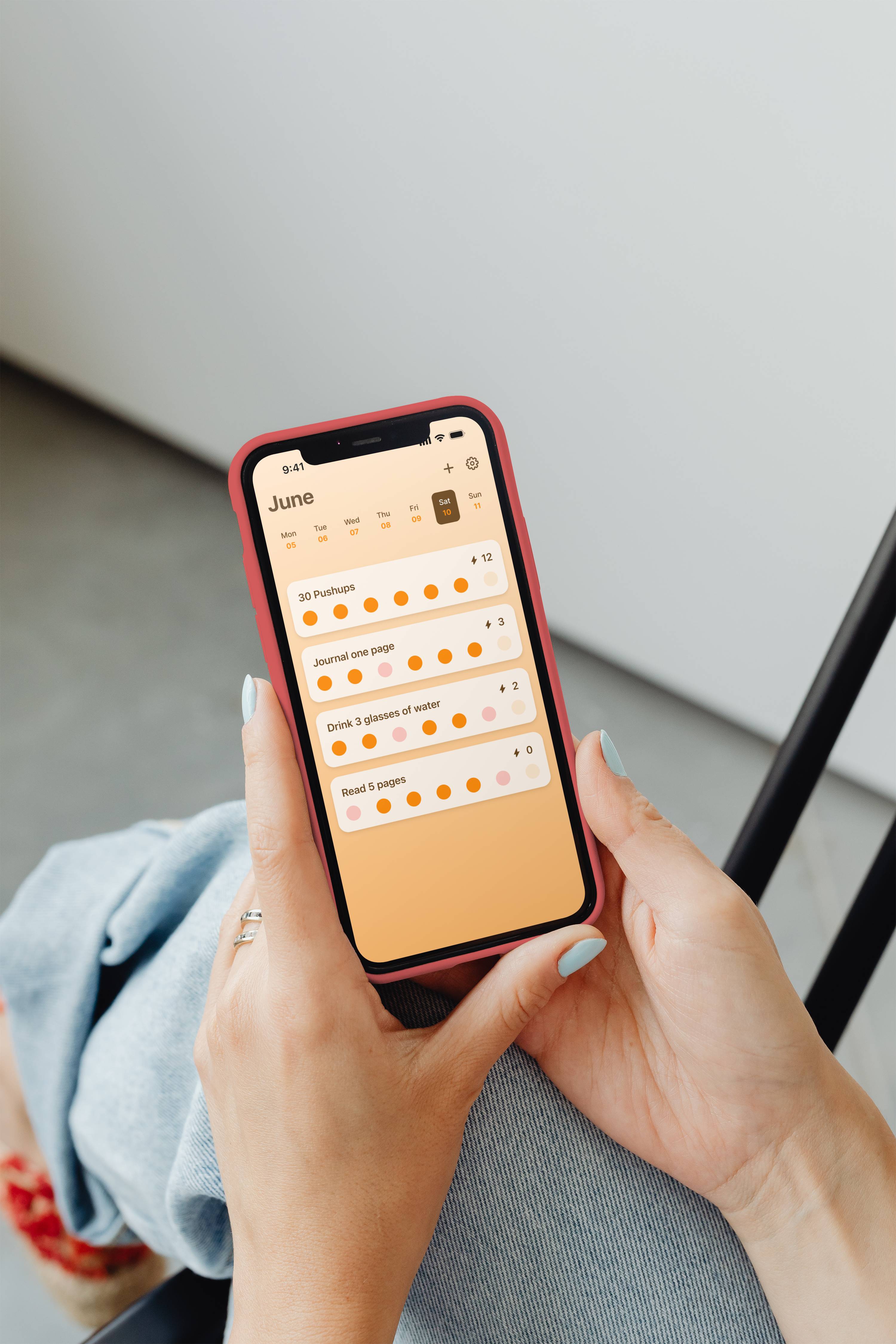
If your goal is to build a routine that eventually runs itself — one that doesn't depend on the app to keep firing — Kabit is the answer.
Most routine apps are designed to keep you using them forever. Kabit is designed around the opposite principle: help you build habits that become automatic, so the app becomes less necessary over time. The interface is deliberately minimal. You see your habits, you check them off, you close the app. Daily check-in takes under 30 seconds.
What makes it work for routine building specifically is the combination of anchor-based reminders (you can set reminders tied to specific behaviors rather than generic times), flexible streak tracking that encourages recovery rather than punishing misses, and a minimum viable habit philosophy that keeps routines alive on the hard days.
The design maps directly onto what behavioral science says actually creates routines: consistent repetition in stable context, small enough to survive difficulty, with immediate visible feedback. Daily routine apps can help you stay accountable, stay motivated, and keep track of progress — and the best ones make showing up easy enough that the routine survives past the initial motivation spike. Education Week Kabit does this better than any other app on this list for users whose goal is genuine automaticity rather than managed scheduling.
Best for: Anyone trying to build 1–5 daily habits that eventually run on autopilot, iPhone users who want minimum friction, people who've failed with complex routine apps before.
Not ideal for: Users who need time-blocked visual schedules or step-by-step guided sequences.
Download Kabit — free habit tracker for iPhone
2. Routinery — Best for Step-by-Step Guided Routines
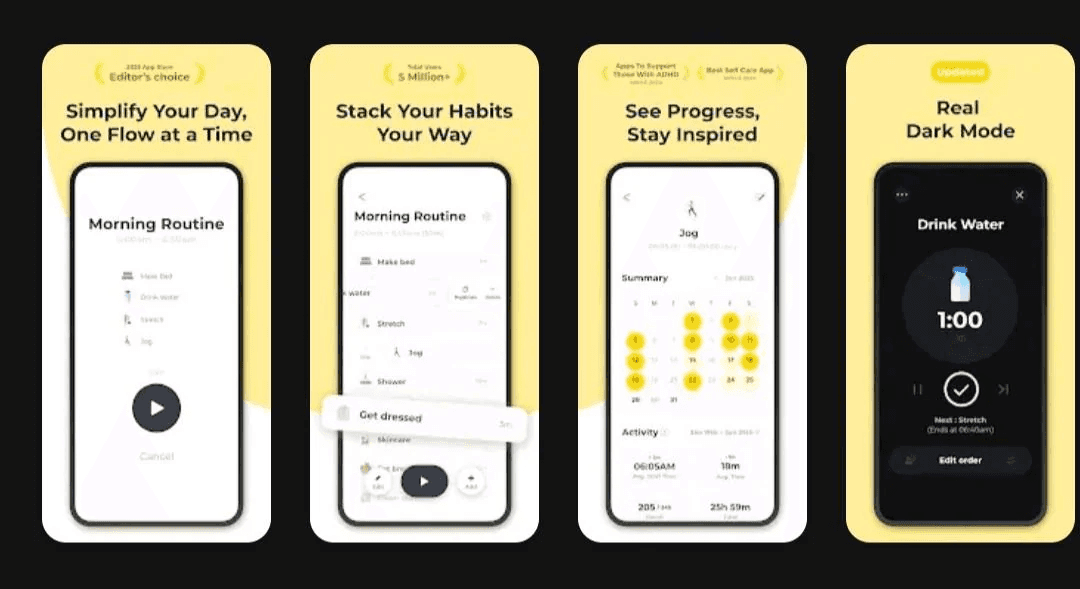
Platforms: iOS, Android | Free with limits; paid from ~$4.99/month
Routinery helps you build routines that run on autopilot — you create a sequence of habits and the app guides you through them one by one with a timer, dramatically reducing the mental energy and decision-making required to get started. arXiv
This is the key distinction from habit trackers: Routinery doesn't just record that you did your morning routine. It actively walks you through it, step by step, with a countdown timer for each behavior. "Drink water — 1 minute." "Stretching — 5 minutes." "Journal — 10 minutes." Each step completes and the next one starts automatically.
For people who struggle with task initiation — getting started on the first step is where routines usually collapse — this guided approach genuinely helps. The visual timer and sequential structure remove the decision of what comes next.
The guided timer with encouraging messages is highly effective for building momentum and focusing through multi-step routines — the visual routine builder allows for intuitive sequencing of tasks, making complex morning or evening routines easy to follow. ADHD Evidence
The limitation is the free tier, which has become increasingly restricted. And like most guided-sequence apps, Routinery works better as a scaffold during early routine formation than as a permanent system — the goal should eventually be to not need the timer.
Best for: People with complex morning or evening routines who struggle with getting started, ADHD users who benefit from external sequencing, anyone building a new multi-step routine from scratch.
Not ideal for: Simple single-habit tracking, long-term automaticity building, budget-conscious users on free tiers.
3. Structured — Best for Visual Daily Planning
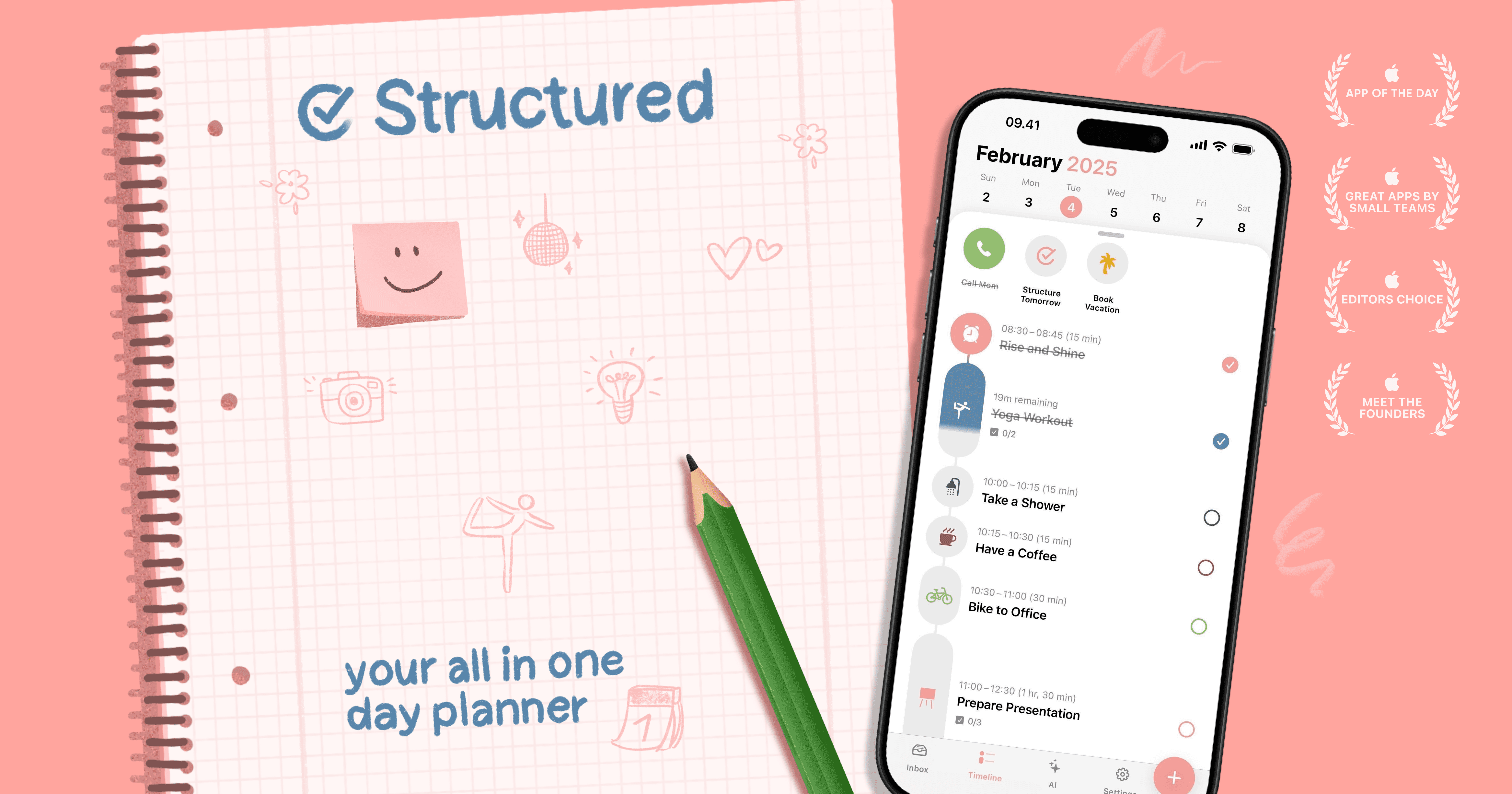
Platforms: iOS, iPadOS, Mac, Android, Apple Watch | Free with limits; Pro from $2.49/month or $49.99 lifetime
Structured combines your calendar events and tasks into one visual timeline — you see your entire day laid out as coloured blocks, stacked vertically, with calendar meetings imported automatically and tasks slotted in between, giving you a single view of everything you need to do in order with time allocated. arXiv
If your routine problem is less "I don't know what to do" and more "I can't see how my habits fit into my actual day," Structured solves that. It's the only app on this list that genuinely integrates your calendar alongside your recurring habits, so a morning meditation doesn't live in a separate app from your 9 AM meeting — they're on the same visual timeline.
The lifetime purchase option makes it unusually good value for a premium app. The limitation is that it's a planner, not a habit tracker — it doesn't have streak counts, formation analytics, or the behavioral scaffolding that supports long-term habit automaticity. It shows you what you planned. Whether you did it is up to you.
Best for: Visual thinkers, people who need to integrate habits into a busy scheduled day, Mac and iPad users who want one timeline for everything.
Not ideal for: Pure habit tracking, streak motivation, users who want behavioral science-backed formation tools.
4. Fabulous — Best for Behavioral Science-Guided Routine Building
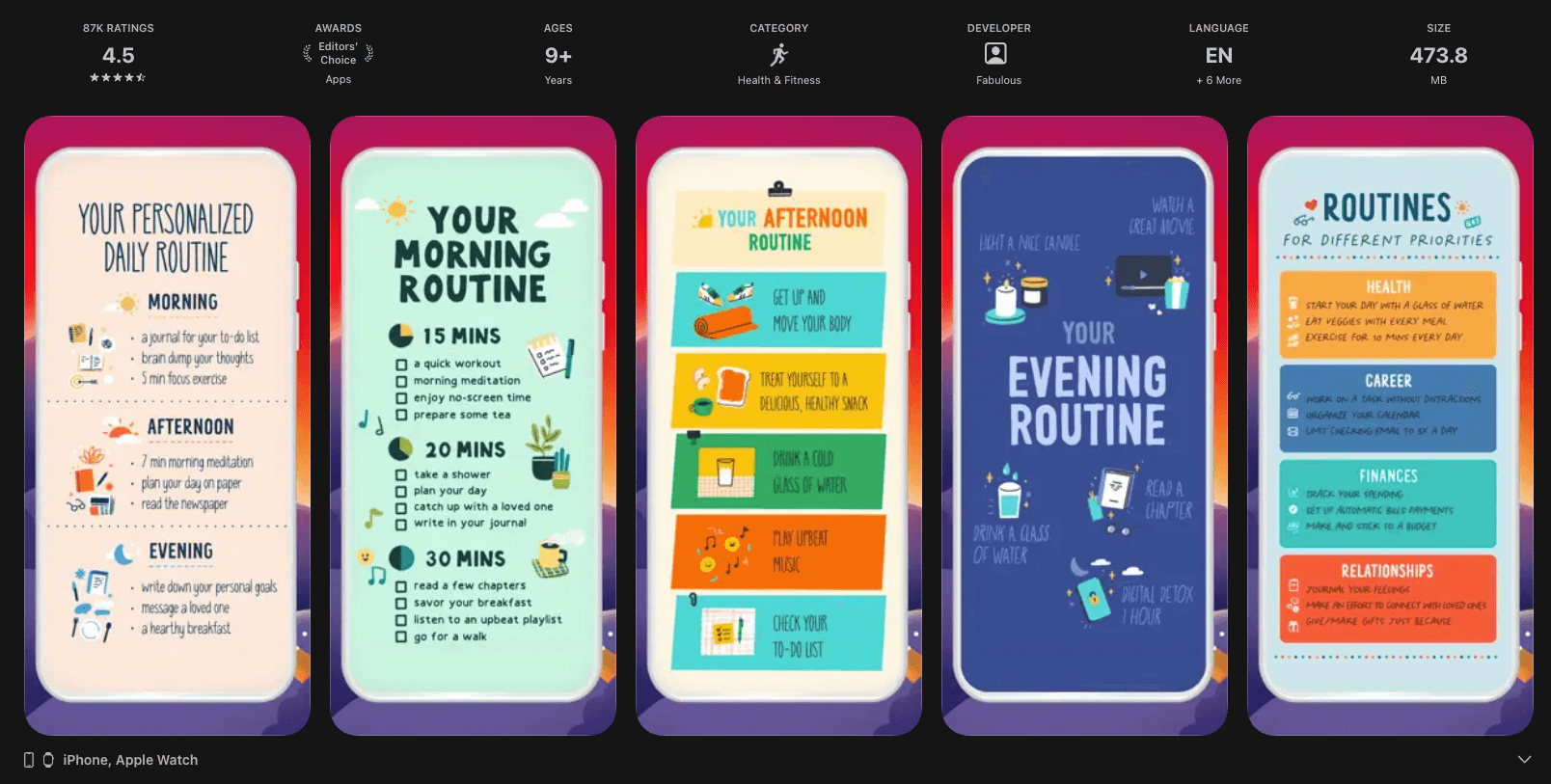
Platforms: iOS, Android | Free trial; subscription required
Fabulous doesn't hand you a blank routine and say "fill it in" — it walks you through building one, using behavioral science principles including habit stacking, starting small, and celebrating wins to gradually introduce new routines into your day. arXiv The app is backed by Duke University research and the onboarding is genuinely best-in-class.
The approach is progressive: you start with one small behavior, anchor it to a morning cue, and gradually build the routine over weeks. This is how routine building actually works neurologically — which is why Fabulous has unusually good early retention compared to most routine apps.
The significant caveat is billing. The billing practices are a serious problem arXiv — users have repeatedly reported confusing subscription structures and difficulty cancelling. The science is solid; the business practices less so. Go in with eyes open about the subscription commitment.
Best for: Complete beginners who want guided, science-backed routine building from scratch, users who respond well to coaching-style apps, anyone who's failed at self-directed routine building.
Not ideal for: Users who want simple self-directed tracking, anyone wary of complex subscription structures.
5. Habitify — Best for Data-Driven Routine Tracking
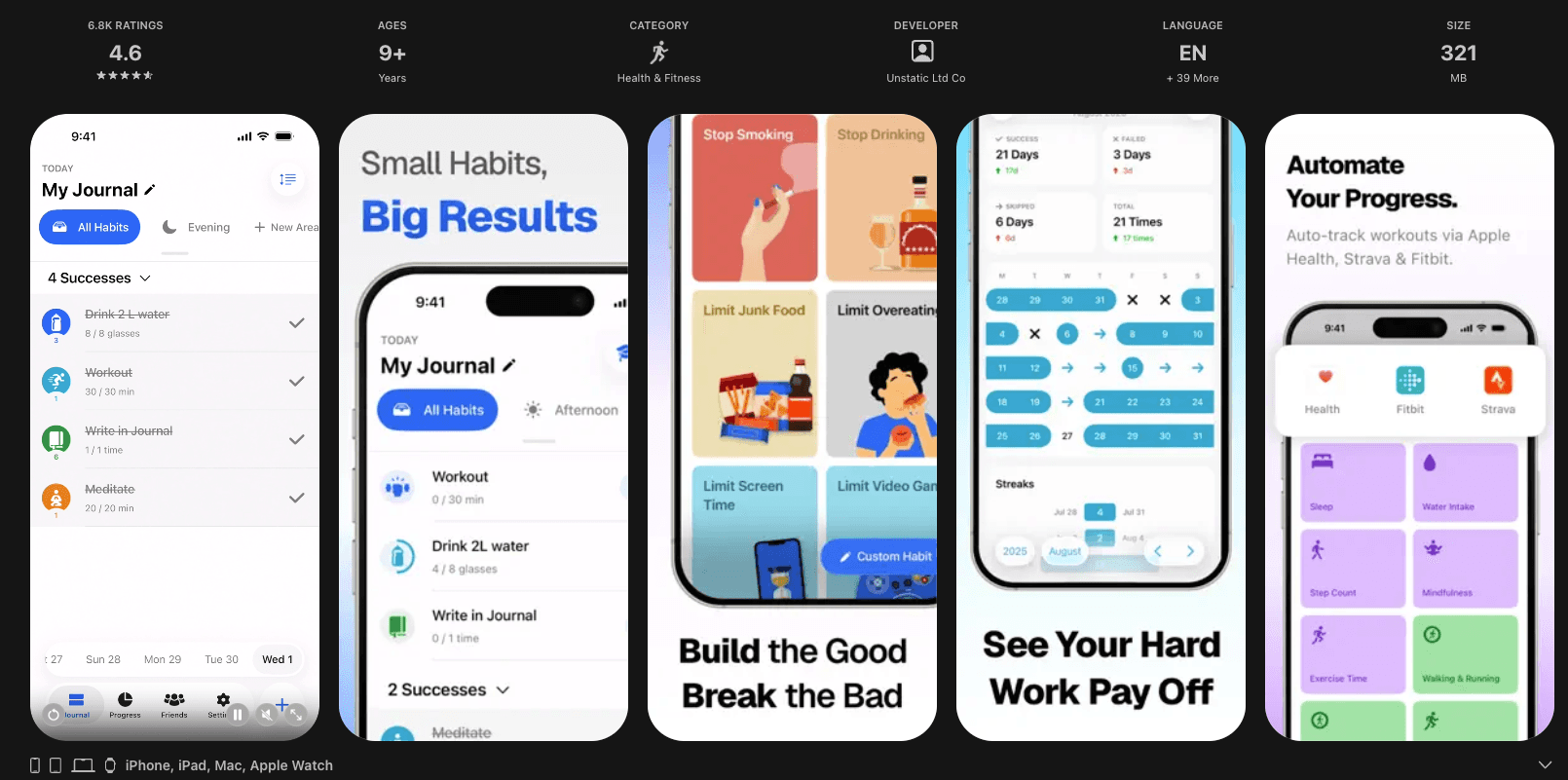
Platforms: iOS, Android, Mac, Web, Apple Watch | Free with limits; ~$8/month or $30/year
Habitify stands out for its clean structure and multi-platform design — it divides habits by categories such as health, productivity, or mindfulness, and its compatibility with Notion, Zapier, and Apple Health allows it to fit neatly into an existing productivity stack. American Psychiatric Association
Where Kabit wins on simplicity and automaticity, Habitify wins on analytics. If you want to know which habits are succeeding, which are failing, why, and when, Habitify's data layer is the most detailed in this category. Daily, weekly, and monthly review summaries give you a clear picture of pattern over time.
The cross-platform support is also genuinely strong — if you switch between iPhone, Mac, and web throughout the day, Habitify stays in sync reliably. The cost is the main friction: it's one of the few apps in this space that requires an ongoing subscription for full functionality, and the pricing is inconsistent across platforms.
Best for: Data-driven users who want detailed analytics on their routine performance, people who use multiple devices, productivity power users who want integrations.
Not ideal for: Minimalists, budget users, people who want simplicity over insight.
6. Habitica — Best for Gamified Routine Building
Platforms: iOS, Android, Web | Free with optional subscriptions
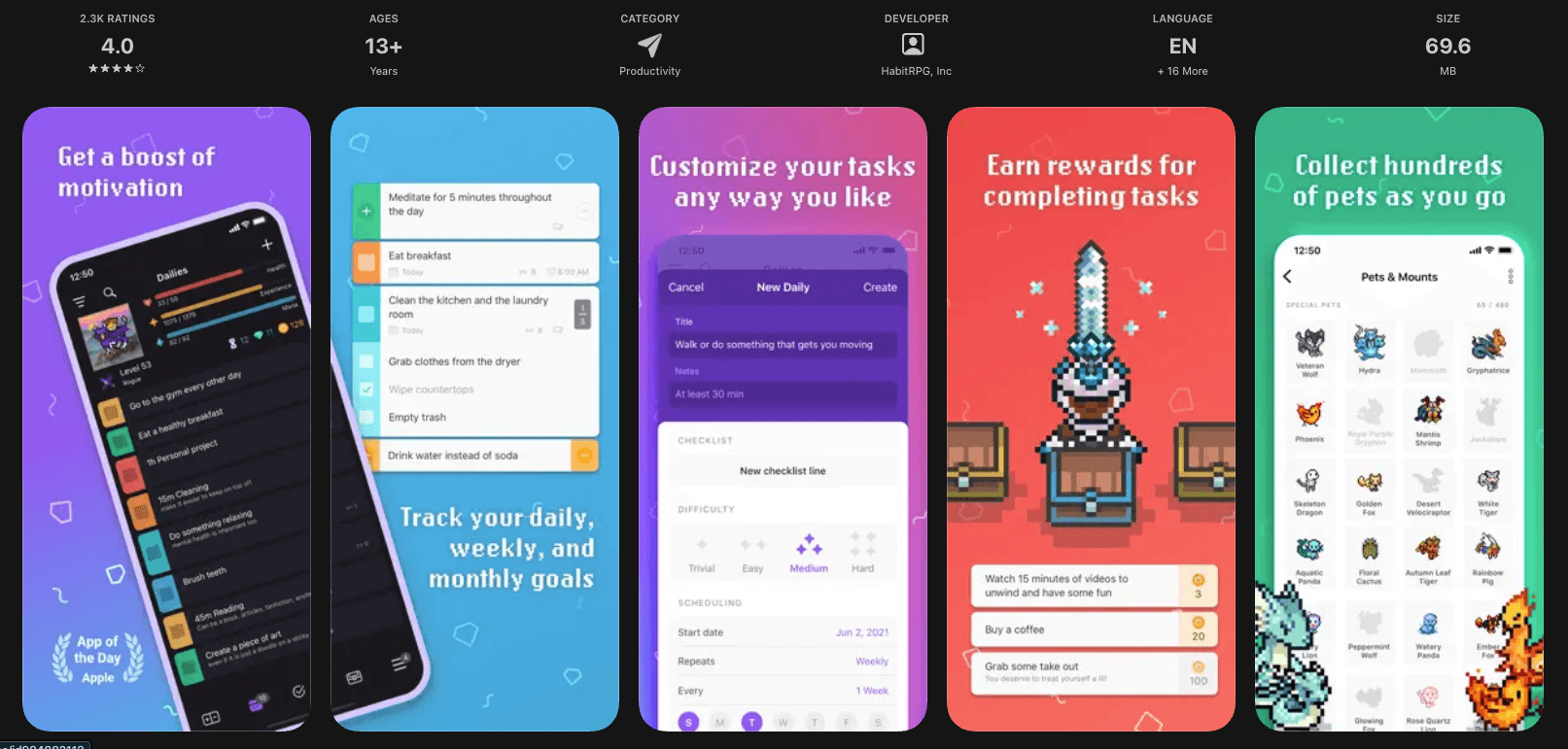
Habitica turns your daily tasks into an RPG with rewards (gold, gear) and penalties (health loss) to motivate consistency — users can join Parties and Guilds to take on quests together, where failing to complete tasks can damage your entire team. PubMed Central
The gamification works better than it should. Social accountability through party quests — where your missed habit literally damages your friends' characters — creates a genuinely unusual motivation mechanism that nothing else on this list replicates. For users who are competitive or social by nature, this changes the compliance calculation entirely.
The honest limitation is complexity. The interface can feel busy or overwhelming for users preferring a minimalist design. PubMed Central And the gamification layer, if it becomes the primary motivation, can create app dependency rather than genuine habit formation — you're doing the habit to protect your character, not because it's becoming automatic. That's fine as a scaffold; less ideal as a permanent system.
Best for: Competitive and social users, people who've failed at solo routine-building, gamers, anyone who finds standard tracking apps boring.
Not ideal for: Minimalists, users who want genuine automaticity over managed motivation, people who find complex UIs overwhelming.
7. TickTick — Best for Routine + Productivity in One App
Platforms: iOS, Android, Mac, Windows, Web | Free with limits; $35.99/year
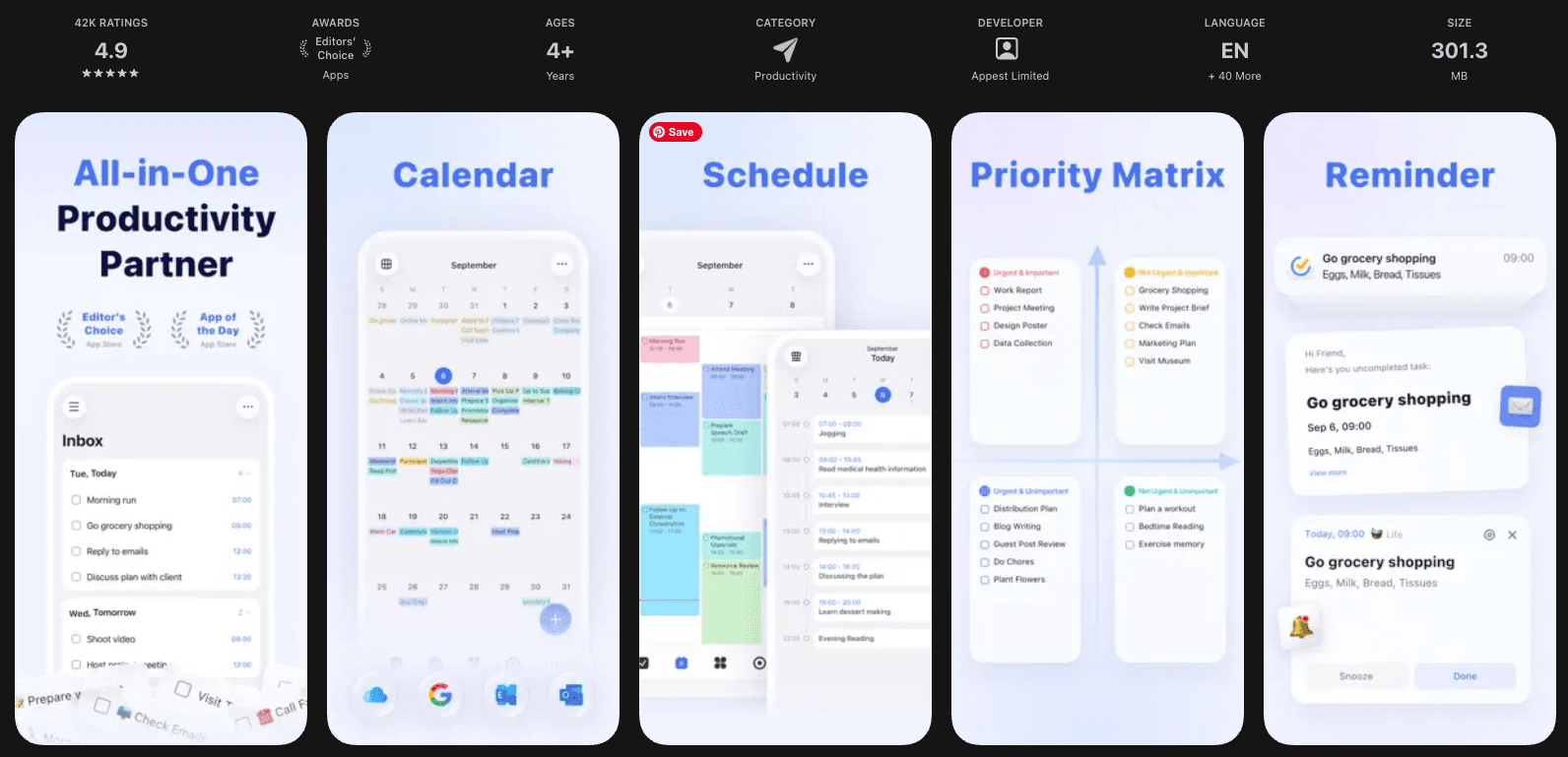
TickTick combines task management, habit tracking, Pomodoro timer, and a calendar view in one interface — with powerful filtering and tagging systems that allow users to create custom views for their daily, weekly, and monthly routines, and robust cross-platform syncing across all major operating systems. PubMed Central
If your routine problem is inseparable from your task management problem — you need your morning habits and your work to-do list in the same place — TickTick is the strongest option. The Pomodoro timer integration is particularly useful for routines that include focused work blocks.
The tradeoff is that TickTick is a productivity app that does habit tracking, not a habit tracker that handles productivity. The habit-specific features — streak tracking, formation analytics, behavioral cues — are thinner than dedicated habit apps. You get breadth at the cost of depth.
Best for: Productivity-focused users who want routines and tasks unified, people who already use TickTick for work, cross-platform users on Mac and Windows.
Not ideal for: Users who want deep habit formation features, minimalists, people whose routine problem is purely behavioral rather than organizational.
8. Loop Habit Tracker — Best Free Option for Android
Platforms: Android only | Free, open-source
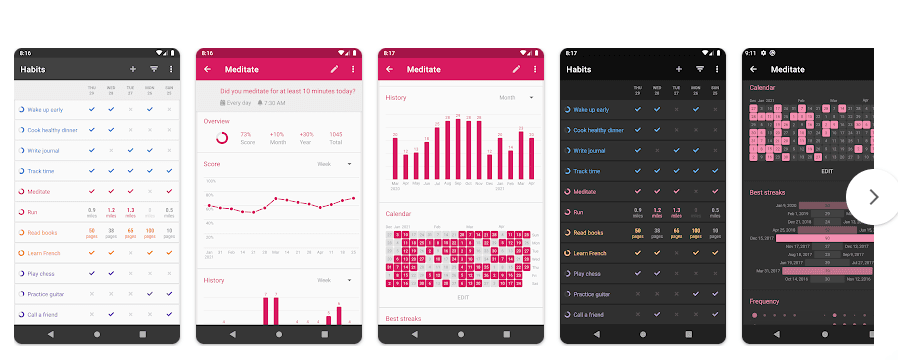
Loop Habit Tracker is a clean, open-source habit tracker that helps you build and maintain routines without distractions — best for minimalists and Android users who just need habit tracking. PubMed Central
Loop does one thing extremely well: it tracks habits cleanly, shows your streaks, and gets out of the way. The open-source nature means no subscription, no upselling, no dark patterns. For Android users who want the equivalent of Kabit's philosophy — minimal, honest, effective — Loop is the answer.
The limitations are platform (iOS users need to look elsewhere) and feature depth — there's no guided sequence, no behavioral coaching, no integration layer. But for a user who just needs to track three to five daily habits with zero friction and zero cost, Loop is genuinely hard to beat.
Best for: Android users, minimalists, budget-conscious users, anyone who wants open-source with no strings attached.
Not ideal for: iOS users, anyone who needs guided sequences, users who want analytics or integrations.
📸 Image prompt: Grid of phone screens showing different app UIs side by side — visual comparison of minimal vs. feature-rich routine apps
How to Choose: A Quick Decision Framework
You want habits that eventually run themselves → Kabit
You struggle to start your routine each morning → Routinery
You need to see habits inside your calendar → Structured
You want science-guided coaching from scratch → Fabulous
You want detailed analytics on your routine performance → Habitify
You're motivated by social accountability and competition → Habitica
Your routine problem is inseparable from task management → TickTick
You're on Android and want free, clean, no-nonsense → Loop
The right routine app is the one with the least friction between deciding to build a routine and actually doing it. For most people, that means starting with fewer features than you think you need — one or two habits, a reliable reminder, and a streak to protect.
For the science behind why routines form the way they do — and why some apps accelerate the process while others slow it down — how habits form in the brain covers the neuroscience in full. And if you're building your first routine from scratch, 5 simple steps to build a daily routine that actually sticks is the place to start.
🎯 Key Takeaways
"Routine app" covers fundamentally different tools — guided sequence timers, habit streak trackers, visual day planners, and gamified systems — and choosing the wrong type is the main reason routine apps fail
The best routine app for most people is the one with the least daily friction, not the most features — complexity adds decisions, and the whole point of a routine is to eliminate decisions
Kabit, Routinery, and Structured solve three distinct problems: automaticity building, step-by-step guidance, and visual calendar integration — pick based on which problem you actually have
What's your current biggest obstacle with building a daily routine — getting started, staying consistent, or fitting habits into a busy schedule? The answer points directly to which app type will help you most.

Learn more
Discover more from the latest posts.