The Best Habit Tracker for ADHD (And Why Most Apps Make It Worse)
Most habit trackers are designed for brains that are good at remembering things, starting tasks on cue, and tolerating delayed rewards. ADHD brains are not those brains.
I've watched this play out in Kabit's user feedback more times than I can count: someone downloads a habit tracking app, sets up five habits, stays consistent for 11 days, misses one, and then quietly disappears. When I've dug into the pattern, it's rarely about motivation. It's about app design that creates friction at exactly the moments ADHD makes everything harder.
This article is about what actually works — and why the standard advice about habit tracking doesn't apply when executive dysfunction is part of the picture.
Why Standard Habit Trackers Fail ADHD Brains
To understand what a good habit tracker for ADHD needs, you first have to understand what ADHD actually does to the habit formation process.
ADHD is primarily a disorder of the prefrontal cortex — the part of the brain responsible for planning, initiating tasks, working memory, and regulating behavior toward future goals. In ADHD, the prefrontal cortex uses dopamine and norepinephrine to send signals that help you focus and plan, and in ADHD, these signals don't work as efficiently. PubMed Central The result isn't laziness or lack of intent. It's a specific set of cognitive obstacles that show up at predictable moments in the habit cycle.
Three of those obstacles matter most for habit tracking:
Task initiation difficulty. The ability to plan, prioritize, and act on tasks is strongly connected to the prefrontal cortex — with executive dysfunction, individuals may find themselves perpetually behind, often underestimating the time required or struggling to follow through. PubMed Central Knowing you want to do something and actually starting it are two different neurological events. Most apps assume the gap between them is motivation. For ADHD, it's a wiring issue.
Working memory gaps. Impaired working memory means difficulty holding information in the mind — challenging to follow multi-step directions or remember what needs to happen next. ADHD Evidence "I forgot" is not an excuse in ADHD — it's a literal description of what happened neurologically.
Time blindness. People with ADHD often underestimate how long something will take or get lost in one activity and run out of time for others. PubMed Central An app that relies on you remembering to check in at the right time — without active prompting — is asking the ADHD brain to do something it's specifically wired to struggle with.
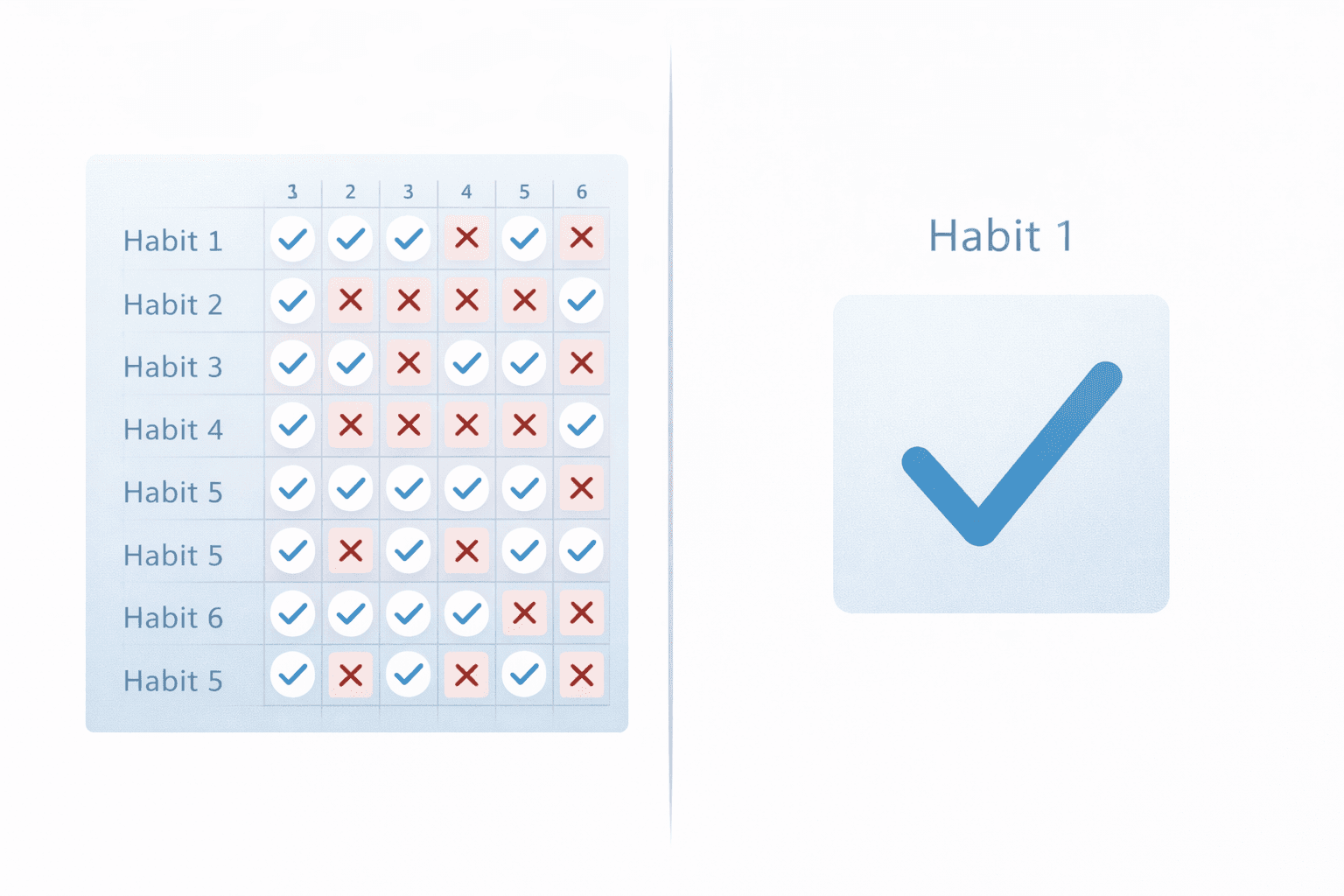
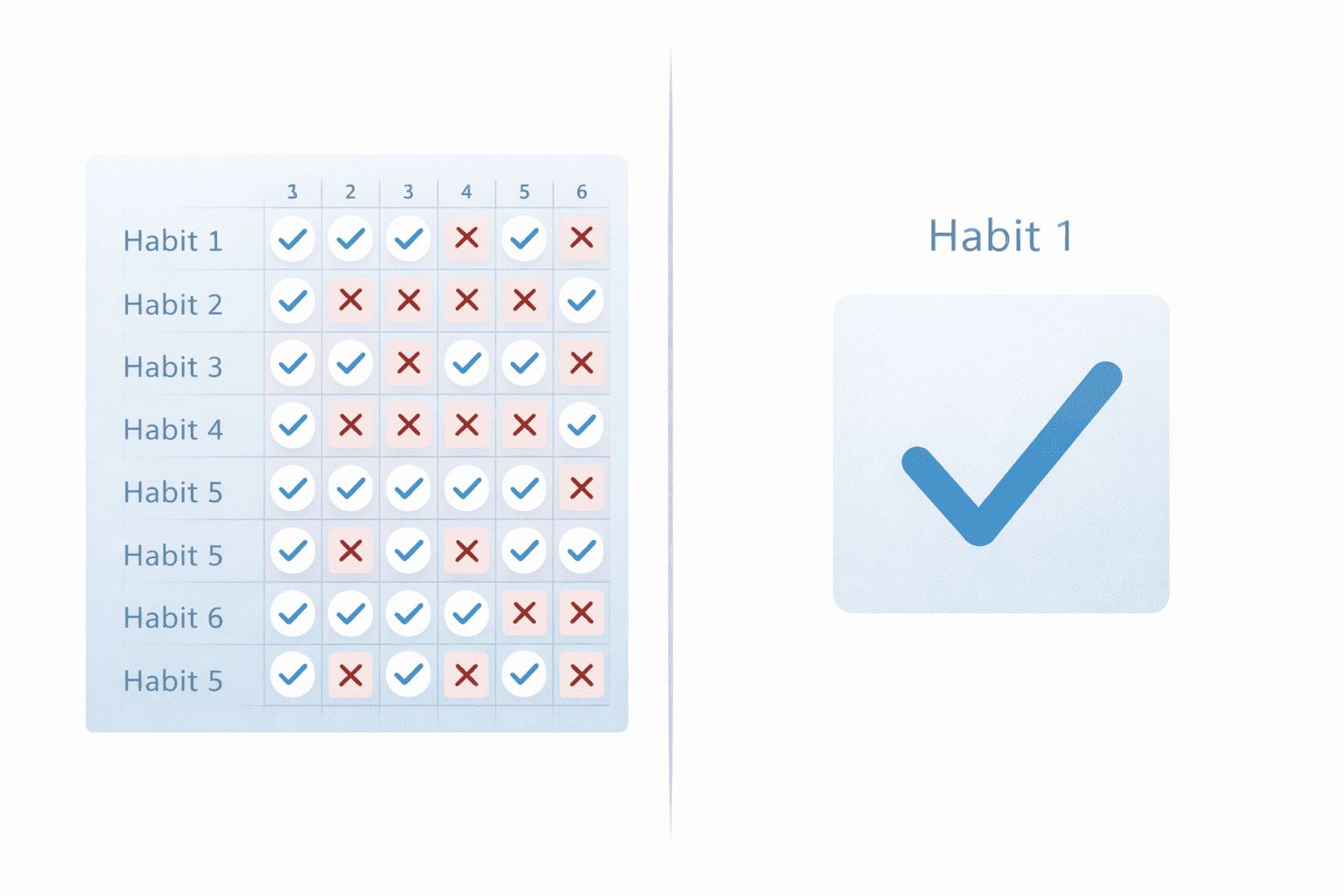
Standard habit trackers ignore all three of these. They assume you'll remember to open the app. They assume a long list of habits won't trigger overwhelm. They assume missing a streak is motivating to recover from rather than crushing to process. For neurotypical users, these assumptions are mostly fine. For ADHD, each one is a failure point.
What an ADHD-Friendly Habit Tracker Actually Needs
Based on both the neuroscience and the real-world patterns I've seen in Kabit's users, there are five non-negotiables for a habit tracker that works with an ADHD brain rather than against it.
1. Aggressive, customizable reminders
This is the single most important feature, and it's the most commonly done badly. A single daily notification at a fixed time fails ADHD for two reasons: it arrives at the wrong moment half the time, and it becomes invisible through habituation within a week.
What works: multiple reminder windows, reminder text you can personalize, and the ability to set context-specific prompts ("After your morning coffee" rather than "9:00 AM"). The reminder needs to function as a genuine external working memory trigger — not just a badge on an icon.
2. Minimum viable habit list
The temptation when starting any habit system — especially for ADHD, where hyperfocus can make planning feel like productivity — is to track everything at once. This is reliably catastrophic.
Dopamine and norepinephrine irregularities in ADHD mean that novelty drives engagement early, but the crash when complexity becomes overwhelming is steeper and faster than in neurotypical users. Starting with one to three habits isn't just good habit advice — it's neurologically appropriate for ADHD. An app that makes it easy to add 20 habits is actively working against you.
3. Streak flexibility without shame
Here's the feature decision that separates apps built for real humans from apps built for idealized productivity robots: how they handle missed days.
For ADHD brains, a broken streak doesn't just feel like a setback. The amygdala — your emotional alarm system — when stress is high, can override the prefrontal cortex. PubMed Central A missed streak triggers an emotional response that can make the app feel genuinely threatening to open. Users don't just skip a day — they avoid the app entirely to avoid confronting the evidence of the miss.
An ADHD-friendly tracker acknowledges that a miss happened, makes it easy to recover without penalty theater, and doesn't use aggressive streak loss messaging. The goal is to get back on track — not to perform guilt.
4. Minimal cognitive load at check-in
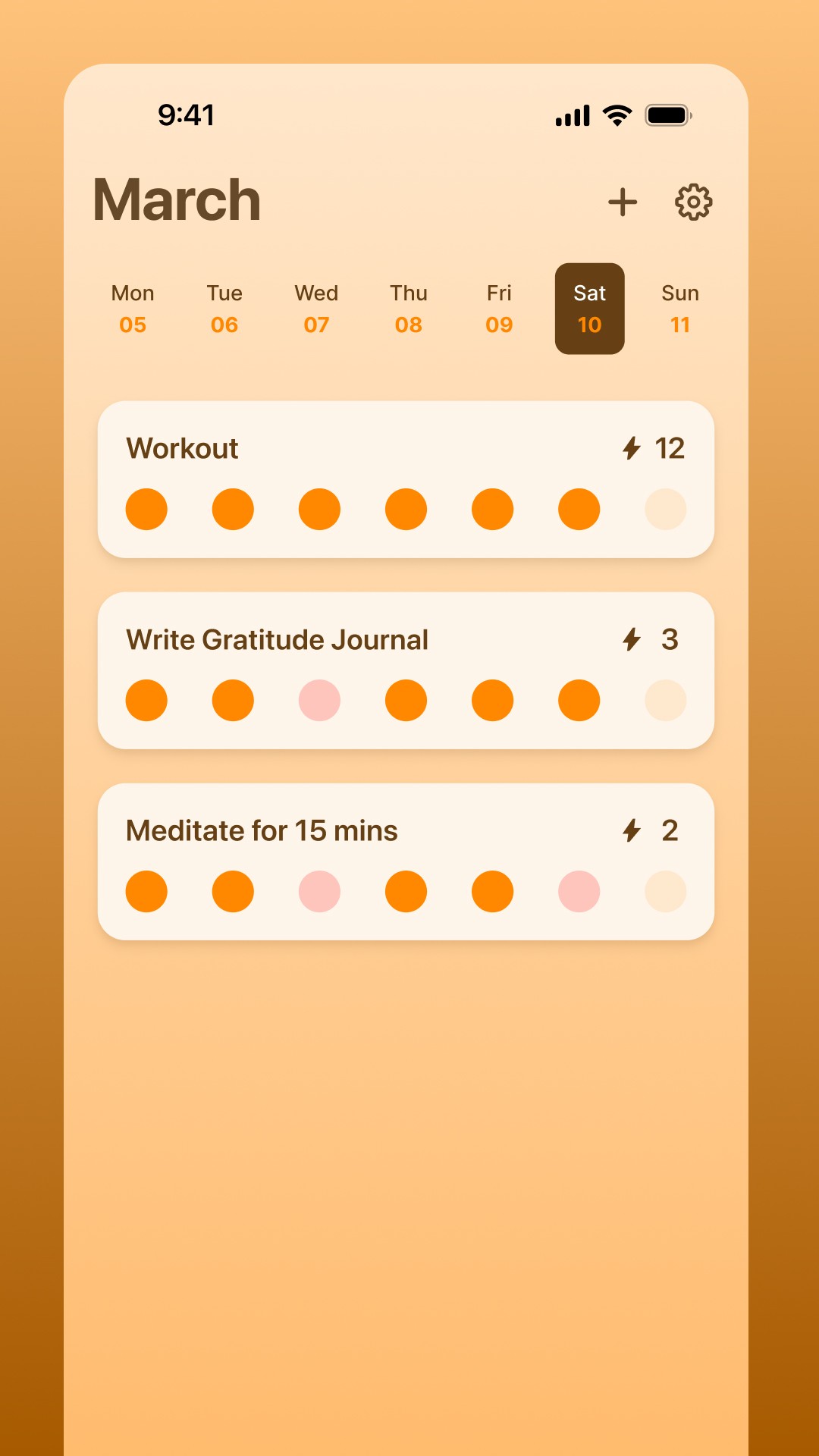
The moment you open the app to log your habits should require as few decisions as possible. Complex dashboards, multiple tabs, nested menus — all of these add cognitive friction at the exact moment the ADHD brain is most likely to abandon the interaction.
A single-screen view of today's habits, large clear checkboxes, and immediate visual confirmation. That's it. Every additional element is a reason to close the app before completing the log.
5. Progress visibility that rewards consistency, not perfection
ADHD brains respond strongly to immediate, visible feedback — this is directly linked to the dopamine reward circuitry that functions differently in ADHD. Dopamine plays a central role in motivation, reward processing, and task initiation — when dopamine levels are low or dysregulated, initiating tasks and sustaining effort become disproportionately difficult. PubMed Central
A streak counter, completion percentage, or visual calendar that makes today's check-in feel rewarding in the moment — not just eventually — is not a gamification gimmick for ADHD users. It's a functional accommodation for how their reward system works.
How to Set Up a Habit Tracker System That Fits ADHD
The right app is only half the equation. The setup matters just as much — and most guides get this wrong by treating ADHD habit building identically to neurotypical habit building.
Start with one habit. Genuinely one.
I know every productivity article says this and then nobody does it. For ADHD, it's not a suggestion — it's a structural requirement. The novelty effect means the first two weeks will feel easier than they are. Use that window to anchor one habit so deeply that it survives the novelty crash. Then add the second.
Attach your habit to an existing anchor behavior, not a time.
"7:30 AM" as a habit cue fails ADHD because time blindness means 7:30 AM arrives and departs without being noticed. "After I make my first coffee" is a sensory, contextual cue — something the ADHD brain is much more likely to actually register. Habit stacking works particularly well for ADHD for exactly this reason: you're borrowing the cue reliability of an established behavior rather than relying on time awareness.
Set your reminder to fire 5 minutes before the anchor behavior.
Not at the habit time. Before it. The notification needs to arrive when you still have the mental bandwidth to act on it — not as a late reminder that you've already missed the window.
Use the "never miss twice" rule as your only rule.
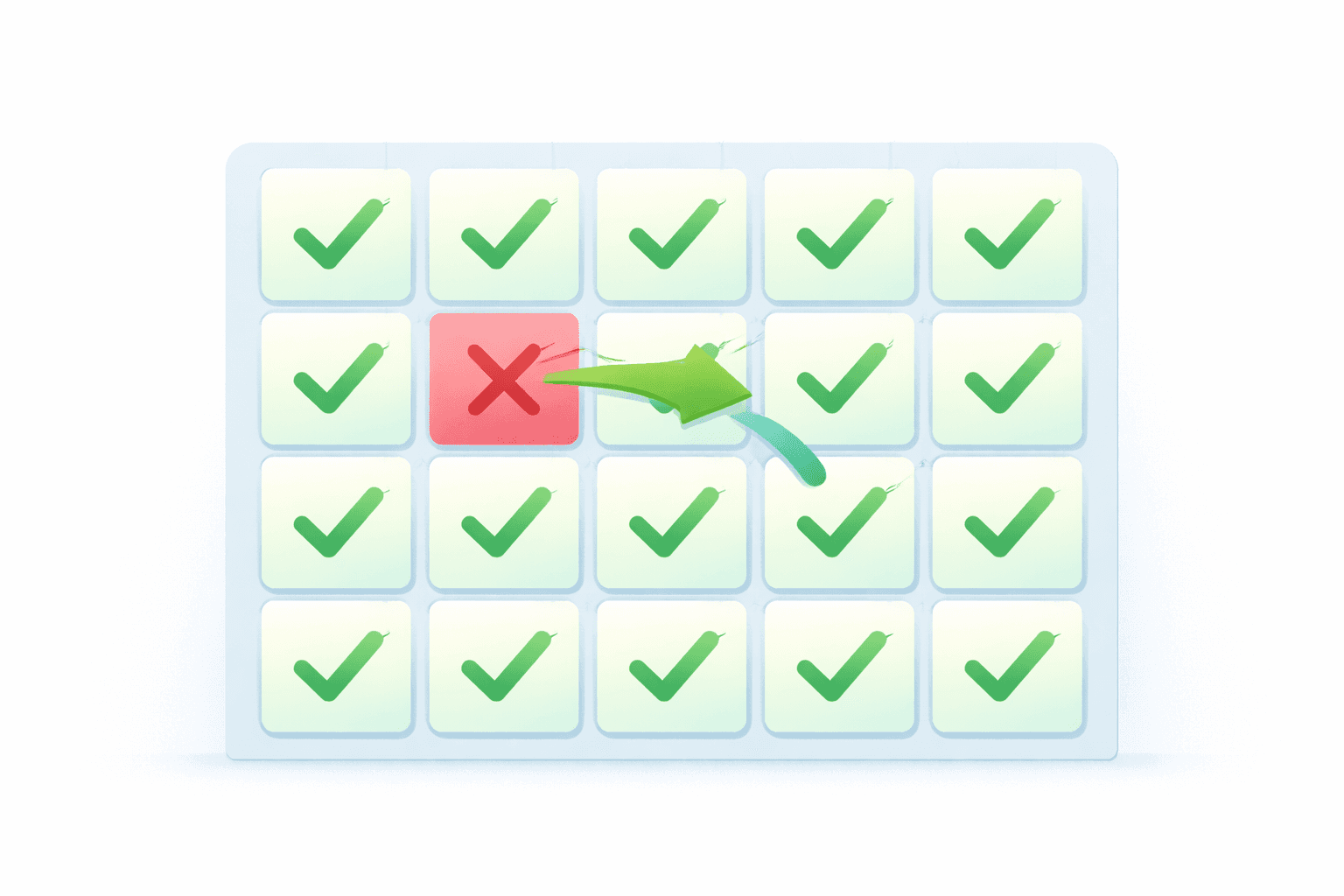
Perfectionism and ADHD are a genuinely dangerous combination. When the goal is a perfect streak, one miss often triggers the what-the-hell effect — "I've already broken it, so what's the point?" — which leads to complete abandonment. The only rule you need is: if you miss a day, the next day is non-negotiable. One miss is a fluctuation. Two misses is a pattern. Keep the rule simple enough that your working memory can hold it under stress.
For a deeper look at recovering from broken streaks specifically, what to do when you break a habit streak covers the neuroscience of why one miss feels so disproportionately bad — and the exact steps to reset.
Why Kabit Works for ADHD Users
I didn't build Kabit specifically for ADHD — but the design principles that make it effective for anyone trying to build habits happen to align closely with what ADHD brains need.
The interface is deliberately minimal. There's no feature bloat, no complex dashboards, no gamification layer that turns the check-in into a chore. You open it, you see your habits, you check them off, and you close it. The whole interaction takes under 30 seconds.
The reminder system lets you customize both the time and the message — which means you can write reminder copy that actually registers for your brain rather than generic "time to track!" notifications that fade into background noise.
And the streak system is designed around consistency over perfection. Missing a day doesn't destroy your history or trigger punishing messaging. The data is still there — it just shows a gap, which is honest rather than catastrophic.
Several users have told me Kabit is the first daily habit tracker they've stuck with beyond the first month. When I ask what made the difference, the answer is usually some version of the same thing: it was simple enough to actually use on the bad days.
That's the bar for ADHD — not what works when you're motivated and focused. What works when you're not.
The Honest Answer
No app is going to fix ADHD. The executive dysfunction is neurological, not organizational — and the right tool is a support structure, not a cure.
But the wrong tool can make things significantly worse. An app that punishes misses, overwhelms with features, or relies on your working memory to remember to use it is actively adding friction to a process that already has plenty.
The best habit tracker for ADHD is the simplest one you'll actually open on your hardest days. Everything else is secondary. For most people I've heard from, kabitapp.com is where that starts — because it was built with the principle that good design removes obstacles rather than adding them.
— Rahul
🎯 Key Takeaways
Standard habit trackers fail ADHD users at three specific points: task initiation, working memory gaps, and time blindness — all of which app design can either accommodate or worsen
The five non-negotiables for an ADHD-friendly habit tracker: aggressive reminders, short habit lists, shame-free streak recovery, minimal check-in friction, and dopamine-responsive progress feedback
Setup matters as much as the app — anchor habits to behaviors not times, use the never-miss-twice rule, and start with genuinely one habit before adding more

Learn more
Discover more from the latest posts.