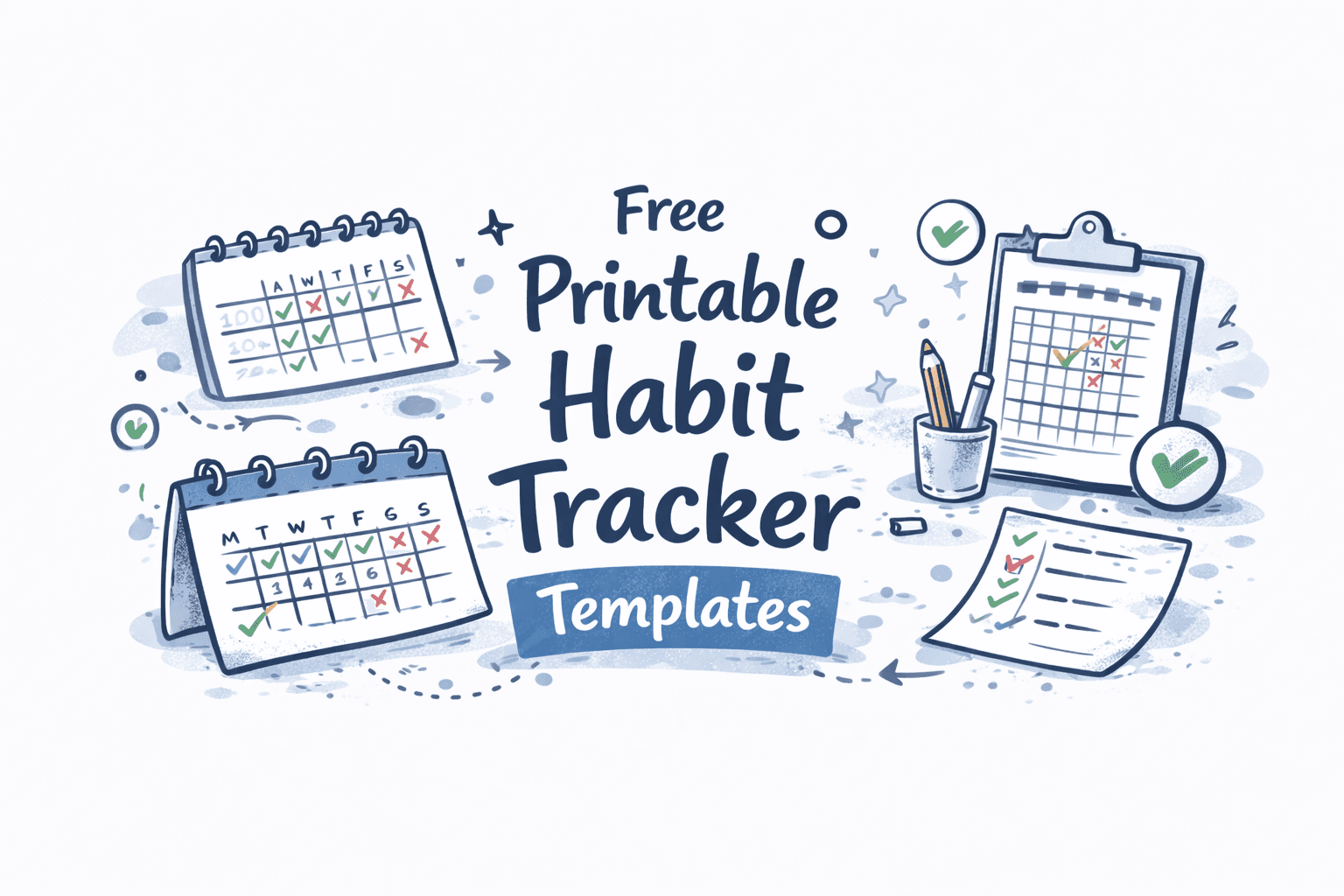
The Visual Progress Effect: Why Tracking Makes Habits 2.5x More Likely to Stick
You meditate for five days straight. Then you forget whether you did it yesterday. The uncertainty creates doubt. By day seven, the habit quietly disappears. No dramatic failure—just a slow fade into nothing.
Now imagine marking each day with a simple checkmark. Day five, you see an unbroken chain. Day six, you don't want to break it. Day seven, the visual evidence of your progress pulls you back even when motivation is low.
This is the visual progress effect—and research shows it makes habits 2.5 times more likely to survive.
The Science of Seeing Progress
A meta-analysis examining over 19,000 participants published in Psychological Bulletin found that monitoring goal progress significantly increased rates of goal attainment. The effect held across diverse domains—exercise, diet, finance, and health—suggesting something universal about the act of measurement itself.
The mechanism operates on two levels. First, tracking reduces cognitive load. Your working memory is limited. Trying to remember whether you meditated, exercised, or drank enough water creates mental strain. Habit trackers function as external executive-function tools, offloading reminders so your brain can focus on performing the behavior rather than managing it.
Second, tracking creates immediate feedback loops that habits depend on to form. Most positive habits yield delayed benefits—weight loss takes months, career progress takes years. This lag makes it genuinely difficult to feel like progress is happening. Visual tracking bridges this gap by providing proof today that change is occurring, even when tangible results aren't visible yet.
The Delayed Feedback Problem
Research on the habit loop reveals that immediate rewards drive automaticity far more effectively than delayed ones. When you cook, you taste ingredients immediately. When you practice an instrument, you hear the improvement in real time. But when you try to build health or productivity habits, results appear weeks or months later.
This delay creates a dangerous disconnection. Your brain struggles to link today's behavior with outcomes that appear in the future. Without a clear reward signal, the habit loop never fully closes. Visual tracking solves this—each checkmark, each filled square, each growing streak provides an instant reward that closes the loop immediately. You're not waiting for external validation. You're seeing progress today.
Studies on weight management tracking found that people who kept daily logs lost twice as much weight as those who didn't—not because tracking burned calories, but because it created awareness and immediate feedback that transformed vague intention into visible commitment.
Why Streaks Create Their Own Motivation
Research on behavioral economics and streak psychology found that individuals expend 40% more effort to maintain an active streak than to achieve identical behavior without streak tracking. The visual chain becomes intrinsically motivating beyond the behavior itself.
The growing number represents more than completed actions—it represents identity. A 30-day meditation streak doesn't just mean you meditated 30 times. It means you are someone who meditates. The streak provides evidence your brain uses to construct and reinforce self-perception. This connects directly to why identity-based habits create lasting change—visual tracking provides the concrete evidence that anchors the identity shift.
Studies show that self-monitoring increases awareness of current behaviors and makes people more conscious of discrepancies between current and desired behaviors. This awareness gap creates motivational tension that drives continued effort toward closing it.
The Simplicity Principle
Not all tracking is equally effective. Research comparing binary tracking to detailed metrics during habit formation found that simple yes/no completion outperformed complex measurement by 27%. Tracking duration, intensity, reps, or other variables during early habit formation adds cognitive friction that undermines consistency.
The reason is decision fatigue. When tracking requires significant effort or judgment—"Was that 22 minutes or 25?"—you introduce a barrier that reduces follow-through. Binary tracking removes this barrier entirely. Did you do it? Yes or no. That's enough.
Research from PMC emphasizes that self-monitoring works best when it's immediate, specific, and low-effort. The tracking should take less time than the habit itself. Complexity belongs later, once the behavior is automatic and you're optimizing rather than forming.
This is why habit tracking apps work more effectively than spreadsheets or journals for most people. A single tap to mark complete is frictionless. Opening a spreadsheet, entering data, and saving the file is not. Friction kills consistency.
The Awareness Loop
Studies on self-monitoring in behavioral psychology reveal a third mechanism beyond feedback and motivation: heightened self-awareness itself changes behavior. When you know you'll track something, you pay more attention to doing it. The anticipation of recording creates accountability even before the tracking happens.
This pre-tracking awareness effect was documented in research on eating behavior, where participants who planned to log meals made measurably healthier choices throughout the day—not just at logging time. The tracking commitment altered decision-making in the hours before any data was recorded.
Your habits change simply because you intend to track them. The act of opening Kabit each morning creates awareness that primes you for consistency throughout the day. The tracker isn't just recording behavior—it's shaping it.
Making Tracking Work for You
The research points to clear implementation principles:
Track immediately. Open your tracker right after completing the behavior. The tighter the loop between action and visual confirmation, the stronger the neural association your brain builds.
Keep it binary. During habit formation, track completion only. Did you do it? Mark yes. Introduce complexity only after automaticity develops.
Make tracking visible. Research on environmental design shows that visible cues trigger automatic behaviors. Keep your tracker accessible—on your home screen, not buried in a folder.
Never skip tracking, even on bad days. If you miss a habit, still open your tracker and mark it incomplete. This maintains the tracking habit even when the behavior slips, making recovery faster and more reliable.
The goal isn't perfect data collection. It's creating visible proof that you're showing up—evidence that motivates continued action even when results haven't appeared yet.
Ready to harness the visual progress effect? Download Kabit to track your habits with immediate visual feedback and watch your consistency compound into lasting change.

Learn more
Discover more from the latest posts.