
Why Your Habits Fail (And the Neuroscience Behind Making Them Stick)
You've probably experienced this frustrating cycle: You commit to a new habit with genuine enthusiasm, maintain it for a few days or weeks, then watch it crumble despite your best intentions. The gym membership goes unused. The meditation app collects digital dust. The journal remains mostly blank.
Here's what most people don't realize—your habits aren't failing because you lack discipline. They're failing because you're working against your brain's fundamental wiring. Understanding the neuroscience of habit formation changes everything.
The Hidden Battle: Your Brain's Two Systems
Your brain operates on two distinct systems that are constantly competing for control. Understanding this conflict is the first step to building habits that actually stick.
System 1 is your autopilot—fast, automatic, and effortless. It handles familiar tasks without conscious thought, like brushing your teeth or your morning coffee routine. System 2 is your deliberate, conscious mind—slow, effortful, and easily exhausted. It's what you use when learning something new or making complex decisions.
Here's the problem: every new habit starts in System 2, which requires active mental energy. But System 2 tires quickly. This is why you can stick to your morning workout for three days when motivation is high, but by day four, your brain defaults back to the easier pattern of staying in bed.
The solution? You need to transfer behaviors from System 2 to System 1—from conscious effort to automatic response. Neuroscience research shows this happens through a specific process in your basal ganglia, the part of your brain responsible for habit formation.
The Habit Loop: How Your Brain Actually Forms Habits
MIT neuroscientist Ann Graybiel discovered that habits follow a neurological pattern called the "habit loop," which consists of three key elements: cue, routine, and reward. Understanding this loop is crucial because most habit failures happen when one of these elements is missing or misaligned.
Research published in the Journal of Neuroscience reveals that your basal ganglia chunks behaviors into automatic routines. When you repeat a behavior in response to the same cue and receive a reward, your brain literally builds neural pathways that make that behavior easier to execute next time.
Think of it like creating a path through a forest. The first time, you're hacking through dense brush—it's difficult and requires conscious effort. But each time you walk that same path, it becomes clearer and easier to follow. Eventually, you can walk it without thinking.
The key insight: your brain is designed to automate behaviors to conserve energy. By understanding and leveraging this natural tendency, you can make habit formation exponentially easier.
Why Motivation Fails (And What Works Instead)
Here's an uncomfortable truth that the self-help industry doesn't want you to know: motivation is fundamentally unreliable for building lasting habits. Stanford behavior scientist BJ Fogg's research demonstrates that motivation fluctuates constantly—it's like trying to build a house on quicksand.
Fogg's Behavior Model shows that behavior happens when three elements converge: motivation, ability, and prompt. Most people focus exclusively on motivation, but that's exactly backward. Neuroscience research indicates that the most effective approach is to make the behavior so easy that motivation becomes nearly irrelevant.
This is why the "go hard or go home" mentality fails. When you set ambitious goals like "exercise for an hour daily" or "meditate for 30 minutes every morning," you're requiring high motivation to overcome high difficulty. This works when you're feeling inspired, but motivation is temporary. Your brain's default is to conserve energy, not expend it.
The smarter approach? Reduce the behavior to something so small that you can do it even on your worst day. This is the foundation of what James Clear calls "atomic habits"—tiny changes that accumulate into remarkable results.
The Dopamine Factor: Understanding Your Brain's Reward System
Your habits are powered by dopamine, the neurotransmitter that drives motivation and reinforces behavior. But here's what most people misunderstand: dopamine isn't released when you achieve a goal—it's released in anticipation of the reward.
Neuroscientist Wolfram Schultz discovered that dopamine spikes when you expect a reward, not when you receive it. This has profound implications for habit formation. If you only celebrate big milestones ("I'll reward myself when I've worked out for 30 days straight"), you're missing thousands of opportunities to trigger the dopamine response that reinforces the behavior.
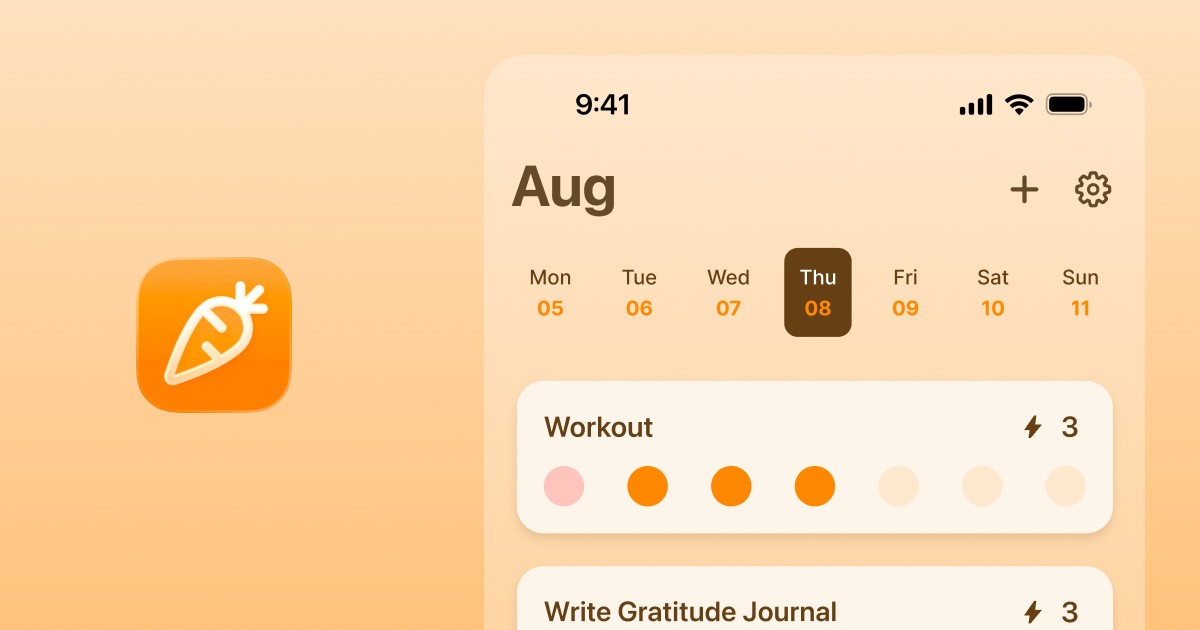
This is why tracking matters so much. Research from Teresa Amabile at Harvard Business School found that making progress in meaningful work is the most powerful motivator. When you track your habits and see visual progress—like the streak counters in Kabit—you're triggering dopamine release that reinforces the behavior neurologically.
Your brain learns: "This behavior leads to visible progress, which feels good. Let's do it again."
The Critical Window: Understanding Habit Formation Timeline
How long does it actually take to form a habit? The popular "21 days" myth came from a 1960s plastic surgeon who noticed patients took about 21 days to adjust to their new appearance. But actual neuroscience research tells a different story.
A study by University College London found that it takes an average of 66 days for a new behavior to become automatic—and the range varied from 18 to 254 days depending on the person and behavior. More complex behaviors take longer to automatize.
But here's the crucial insight: the timeline matters less than consistency. Your brain doesn't count days—it counts repetitions in consistent contexts. This is why doing your habit at the same time and place accelerates formation. You're building what neuroscientists call "context-dependent memory."
Missing a single day doesn't destroy your progress, but it does slow the automatization process. This is where the streak mentality becomes powerful—not as a source of shame if you break it, but as a visual reminder of the neural pathway you're building.
Implementation Intentions: Programming Your Automatic Response
One of the most robust findings in behavioral science is the power of implementation intentions—specific plans that follow an "if-then" format. Psychologist Peter Gollwitzer's research shows that people who use implementation intentions are 2-3 times more likely to follow through on their goals.
Here's why this works from a neuroscience perspective: when you create an implementation intention, you're essentially pre-deciding a behavior. You're not relying on willpower or motivation in the moment—you've already programmed your response.
Instead of "I want to exercise more," you create: "If it's 7 AM on a weekday, then I will do 5 push-ups immediately after my alarm goes off."
This leverages your brain's pattern-recognition capabilities. By consistently pairing a context (7 AM weekday, alarm rings) with a behavior (5 push-ups), you're accelerating the transfer from System 2 (conscious decision) to System 1 (automatic response).
The Environment Effect: Your Surroundings Shape Your Brain
Your environment doesn't just influence your behavior—it literally shapes your neural pathways. This is due to a phenomenon called "environmental cueing," where your surroundings trigger automatic behavioral responses.
Research from Duke University found that 45% of daily behaviors are performed in the same location almost every day. Your brain associates specific environments with specific behaviors. This means your environment is constantly programming your habits, whether you're aware of it or not.
The coffee shop makes you want to read. The couch makes you want to watch TV. Your bed makes you want to sleep (unless you've been using it for work, which creates conflicting cues).
Smart habit builders leverage this by designing their environment to make desired behaviors obvious and easy, while making undesired behaviors invisible and difficult. Want to drink more water? Place water bottles in every room. Want to reduce phone usage? Charge it in another room.
This isn't about willpower—it's about working with your brain's natural tendencies rather than against them.
The Identity Shift: Becoming vs. Doing
Perhaps the most powerful insight from habit neuroscience is this: lasting behavior change requires an identity shift. Your brain has a self-concept that influences every decision you make, often unconsciously.
Research in social psychology shows that people are far more likely to engage in behaviors that align with their identity. When someone says "I'm a runner," their brain interprets going for a run as identity-consistent behavior, making it feel natural rather than forced.
This is why outcome-based goals often fail. When you say "I want to lose 20 pounds," you're focused on a future state. Your current identity remains unchanged, creating internal resistance. But when you shift to "I am a healthy person who makes nutritious choices," every healthy meal reinforces this identity at a neural level.
Your brain asks: "Is this what someone like me would do?" If the answer is yes, the behavior flows naturally. If the answer is no, you experience resistance.
Building Habits That Rewire Your Brain
Understanding the neuroscience of habit formation reveals that successful change isn't about willpower or motivation—it's about working with your brain's natural processes. By leveraging the habit loop, reducing friction, programming implementation intentions, designing your environment, and shifting your identity, you're literally rewiring your neural pathways.
Every repetition strengthens the neural pathway. Every streak builds the association between cue and behavior. Every small win triggers the dopamine that reinforces the loop. You're not just building habits—you're physically changing your brain's structure.
The most powerful part? These changes compound. As behaviors move from System 2 to System 1, they require less effort, freeing up mental resources for new growth. This is how people transform their lives—not through heroic acts of willpower, but through understanding and leveraging their brain's fundamental design.
What habit will you start building today? Remember, your brain doesn't require perfection—it requires consistency. Start small, show up daily, and trust the neuroscience.
Ready to build habits that stick? Kabit helps you leverage the science of streak tracking and visual progress to work with your brain's natural wiring. Download now and start rewiring your habits today.

Learn more
Discover more from the latest posts.