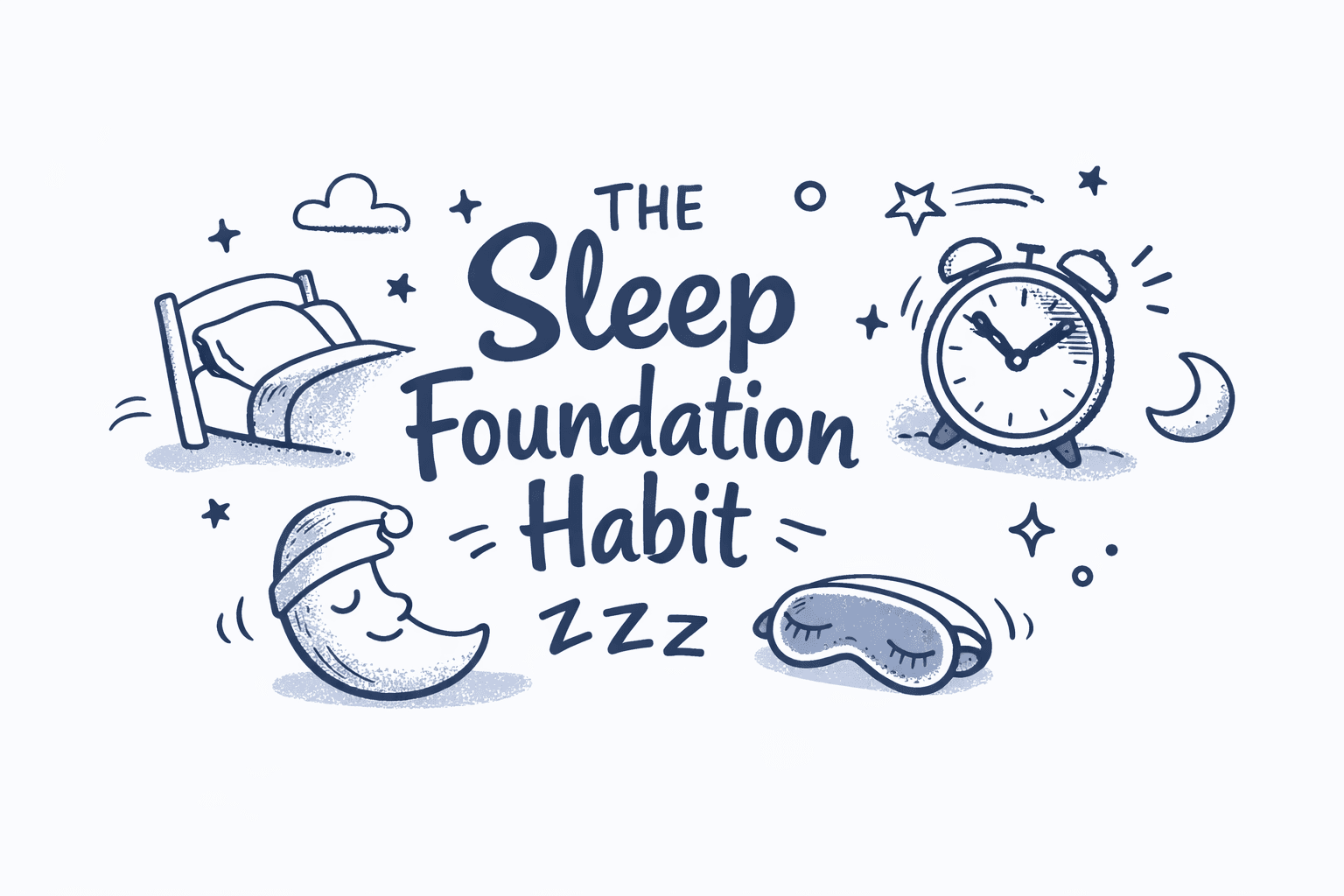
Why Consistent Bedtimes Create 44% Better Sleep Quality
You exercise daily, eat healthily, track your water intake—but still feel exhausted, The missing piece isn't another wellness habit, It's the foundation that makes all other habits possible: consistent, quality sleep.
Research reveals something counterintuitive: sleep isn't just recovery time. It's the keystone habit that determines whether every other behavior in your life succeeds or fails. And building sleep as a habit requires treating bedtime with the same consistency you'd give any other critical routine.
The Habit-Sleep Connection
Research from the University of Pittsburgh examining sleep interventions among college students found that coupling personalized bedtime reminders with immediate rewards increased weeknight sleep by 26% and average sleep duration by 19 minutes. More remarkably, effects persisted weeks after the intervention ended—evidence that sleep routines had become habitual.
Studies on sleep hygiene emphasize that consistency and habit formation are key factors in optimizing sleep effectiveness. When you maintain the same bedtime and wake time daily, your body's natural sleep hormone release becomes more efficient and accurate, creating a trained response to associate your bedroom with sleep.
Research from Stanford's Lifestyle Medicine program found that our brains create associations with different environments. Consistently keeping bedrooms dark, quiet, cool, and comfortable trains the mind to shift into "rest mode" when entering that space—exactly how habit formation works for any behavior.
This connects to why environmental design matters so much for habits. Your bedroom environment either supports or sabotages sleep automaticity.
Why Sleep Habits Fail (And How to Fix Them)
Research published in PMC examining bedtime routines in college students found that many pre-sleep behaviors extend beyond traditional sleep hygiene—checking social media, watching videos, late-night studying. These competing behaviors prevent the development of consistent sleep habits.
The fundamental problem: most people don't treat sleep as a habit requiring deliberate formation. They wait to "feel tired" rather than creating consistent cues that trigger sleep preparation automatically. Sleep Foundation research emphasizes that having a set schedule normalizes sleep as an essential part of your day and gets your brain and body accustomed to getting the full amount you need.
The 65-68°F Rule: Studies show that bedroom temperature around 65-68 degrees Fahrenheit with blankets creates optimal sleep patterns. This isn't preference—it's biology. Your core body temperature naturally drops at night, signaling sleep readiness.
The Light Elimination Effect: Research demonstrates that darkness prompts melatonin production. Streetlights, electronics, or early morning light can delay melatonin onset or cause awakenings you're not even aware of. The solution: blackout curtains or comfortable eye masks.
The Bedroom-Only Association: Harvard sleep medicine experts recommend using your bed for sleeping only—not as an office, workroom, or TV-watching spot. By reserving your bed for sleep, you teach your body to pair going to bed with sleep automatically.
Building Sleep as a Keystone Habit
Studies on habit formation conducted by researchers at University College London's Health Behaviour Research Centre emphasize that development of healthy habits begins with goals that can be easily reached. For sleep, this means starting with one consistent element and building from there.
Fixed wake time first: Sleep Foundation research found that maintaining the same wake time—even on weekends—is more important than consistent bedtime initially. This anchors your circadian rhythm and makes falling asleep at the desired time easier over time.
Pre-sleep ritual development: Dr. Roy Baumeister's research on behavior change shows we excel at replacing unhealthy habits with healthy ones through consistent routines. Creating a calming 30-60 minute pre-sleep ritual signals your body that rest is approaching—reading, stretching, warm bath, or light tidying.
The one-hour electronics rule: Pine Rest clinical research shows that light from TVs, computers, and phones tricks your brain into thinking it's daylight, reducing your body's ability to settle. Stop all screens one hour before bed to allow natural melatonin production.
Track your sleep consistency: When you mark "sleep routine complete" in Kabit each night, you're creating accountability for the foundation habit that enables all others. The visual streak reinforces consistency until the routine becomes automatic.
The Compound Effect of Sleep
Research from the National Institutes of Health emphasizes that sleep affects learning, memory, mood, heart health, and hormone regulation. Poor sleep doesn't just make you tired—it undermines every habit you're trying to build by depleting the willpower and energy needed for behavior change.
This is why morning habits form faster—quality sleep the night before provides the cognitive resources needed for consistency. Without sleep as your foundation, every other habit requires more willpower and faces higher failure rates.
Harvard sleep medicine research found that individuals who established consistent sleep schedules reported feeling like "my body knows when it's time to go to bed and when it's time to wake up." The routine becomes automatic—exactly how all successful habits function.
Making Sleep Your Priority Habit
Stop treating sleep as something that happens after everything else. Start treating it as the foundational habit that makes everything else possible. Set your bedtime like you'd set a meeting. Protect it like you'd protect your workout time. Track it like you'd track any behavior you're serious about changing.
The best part? Sleep habits feel easier to maintain than they seem initially because your body naturally wants consistent rest. You're not fighting biology—you're finally working with it.
Ready to build sleep as your foundation habit? Download Kabit to track bedtime consistency and create the routine that makes all other habits easier.

Learn more
Discover more from the latest posts.